

































































































































Samsung unveils Galaxy XR, the first AI-native device on Android XR, marking the dawn of immersive computing
Samsung Electronics has officially introduced the Galaxy XR, a groundbreaking device that marks the beginning of the Android XR ecosystem. Built in partnership with Google and Qualcomm Technologies, Galaxy XR combines extended reality (XR) and multimodal artificial intelligence (AI) into one open, scalable platform designed to transform how people work, play, and connect.
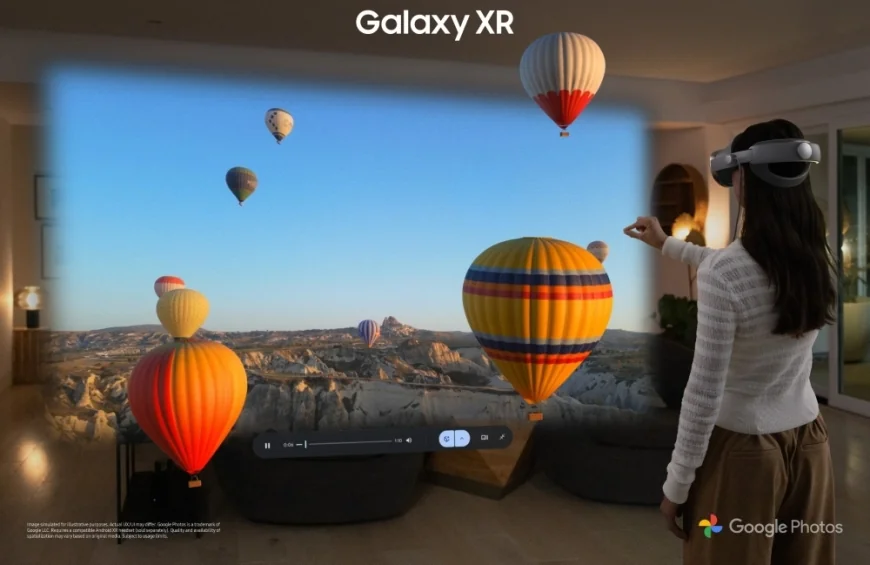
The launch represents Samsung’s most significant step yet into the era of immersive computing — a future where AI seamlessly blends the physical and digital worlds.
“With Galaxy XR, Samsung is introducing a brand-new ecosystem of mobile devices,” said Won-Joon Choi, Chief Operating Officer of Samsung’s Mobile eXperience Business. “Built on Android XR, Galaxy XR expands mobile AI into immersive, meaningful experiences — turning XR from concept into everyday reality.”
A new era of AI-driven extended reality
The Android XR platform, co-developed by Samsung, Google, and Qualcomm, is the first Android system designed specifically for the Gemini AI era. It integrates Gemini AI at the system level, allowing Galaxy XR to act as a true AI companion that interacts naturally through voice, vision, and gesture.
In headset form, Galaxy XR “sees” and “hears” as users do, responding contextually to their surroundings. Tasks such as navigating maps, searching for content, or collaborating virtually become intuitive and conversational — marking a shift from tools that follow commands to AI that anticipates needs.
Google’s Sameer Samat, President of Android Ecosystem, described the collaboration as “a major leap forward,” noting that Android XR will “unlock entirely new ways to explore, connect, and create.”
Open collaboration and a scalable XR ecosystem
Galaxy XR is built on OpenXR standards, making it easy for developers using OpenXR, WebXR, or Unity to adapt their experiences. All existing Android apps work out of the box, giving users access to familiar mobile tools in a completely new environment.
“Galaxy XR embodies our vision for the future — where AI and XR converge to redefine personal computing,” said Alex Katouzian, Group GM of Mobile, Compute & XR at Qualcomm Technologies. “This collaboration will bring powerful new use cases across industries and enable next-generation multi-device experiences.”
Designed for comfort and immersive performance
Engineered with ergonomic precision, Galaxy XR balances lightweight materials with structural strength. A separate battery pack reduces headset weight, while an adjustable light shield enhances immersion by blocking external light when desired. The device’s design distributes pressure evenly across the head, ensuring long-term comfort during use.
At its core, Galaxy XR is powered by the Snapdragon XR2+ Gen 2 processor, enabling visual clarity, spatial awareness, and advanced AI capabilities. Its 4K Micro-OLED display, ultra-precise sensors, and advanced cameras deliver realistic depth and movement tracking, while a six-microphone array ensures crystal-clear audio input and output.
The headset also supports iris recognition for device unlocking and secure app access.
Everyday experiences reimagined in XR
Galaxy XR enables users to discover, work, and play in new ways:
-
Immersive navigation: Gemini can guide users through 3D Google Maps, offering personalized recommendations in real-time.
-
Intelligent video interaction: Integrated with YouTube, users can ask Gemini for deeper insights about videos while watching them.
-
Circle to Search in XR: By drawing a circle in midair, users can instantly search for information about real-world objects seen through the passthrough cameras.
-
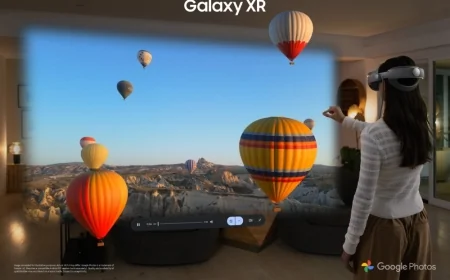
3D memory recreation: Galaxy XR converts 2D photos and videos into 3D, turning personal memories into immersive environments.
-
Cinematic viewing: Users can stream content on the 4K Micro-OLED display, creating a theater-like experience.
-
Next-level gaming: AI-powered gameplay offers real-time coaching and strategy suggestions via Gemini.
-
Creative tools: With Adobe Project Pulsar, users can easily create cinematic edits and 3D visuals within an immersive workspace.
Galaxy XR also introduces enterprise-ready XR capabilities, including virtual training for shipbuilding and heavy industry through partnerships with Samsung Heavy Industries and Qualcomm’s Snapdragon Spaces. These collaborations aim to expand enterprise adoption of XR for training, collaboration, and design.
The future: XR beyond the headset
Samsung’s long-term XR roadmap includes AI-powered smart glasses developed with Google, Warby Parker, and Gentle Monster. These partnerships aim to combine fashion, function, and technology, seamlessly connecting with the Android XR ecosystem to bring AI-native XR experiences into daily life.
Technical specifications (highlights)
-
Chip: Snapdragon XR2+ Gen 2
-
Display: 3,552 × 3,840 resolution, 4K Micro-OLED
-
Memory: 16GB RAM / 256GB storage
-
Battery: Up to 2.5 hours (supports use while charging)
-
Connectivity: Wi-Fi 7, Bluetooth 5.4
-
Weight: 545g (headset), 302g (battery pack)
-
Tracking: 6 world-facing cameras, 4 eye-tracking cameras, 5 IMUs, depth and flicker sensors
-
Audio: Woofer + tweeter speakers, 6-mic array with beamforming
-
Field of view: 109° horizontal, 100° vertical
A milestone for immersive AI
With Galaxy XR, Samsung, Google, and Qualcomm are laying the foundation for a new frontier of human-computer interaction — where AI, XR, and mobility merge to create immersive experiences that feel natural, personal, and limitless.
As Samsung expands its XR portfolio across multiple form factors, Galaxy XR stands as the first step toward a truly AI-native ecosystem, redefining how users discover, create, and connect in extended reality.