
















































































Taiwan strengthens global trade role through value-added diplomacy
Taiwan is cementing its role in the international economic system by implementing its value-added diplomacy policy and strengthening collaborations with democratic partners. Despite global economic uncertainty and U.S. tariffs, the government is actively building resilient supply chains, deepening semiconductor cooperation with European nations, and expanding participation in key regional economic corridors, such as the U.S.-Japan-Philippines Luzon Economic Corridor.
Taiwan continued to solidify its role in the international economic and trade system, a success attributed to the government’s value-added diplomacy policy and the sustained efforts of the Ministry of Foreign Affairs (MOFA) and its associated overseas offices.
According to the MOFA, the third quarter of 2025 saw a marginal easing of global inflation, yet continued economic uncertainty stemming from U.S. tariff policies persisted. In response to this climate, the government has been actively collaborating with the U.S. and other democratic partners to fulfill President Lai Ching-te’s vision of establishing more resilient and diverse supply chains globally.
Simultaneously, the MOFA has worked to facilitate international investment by domestic businesses while proactively promoting the Diplomatic Allies Prosperity Project.
Key Achievements in Economic Cooperation
Highlights of the MOFA’s recent achievements include significant efforts to promote new energy cooperation with allies and like-minded partners through the government’s integrated diplomacy policy. This included renewing the Memorandum of Understanding on Taiwan-Australia Energy and Mineral Cooperation and dispatching a delegation to explore hydrogen power opportunities in Paraguay.
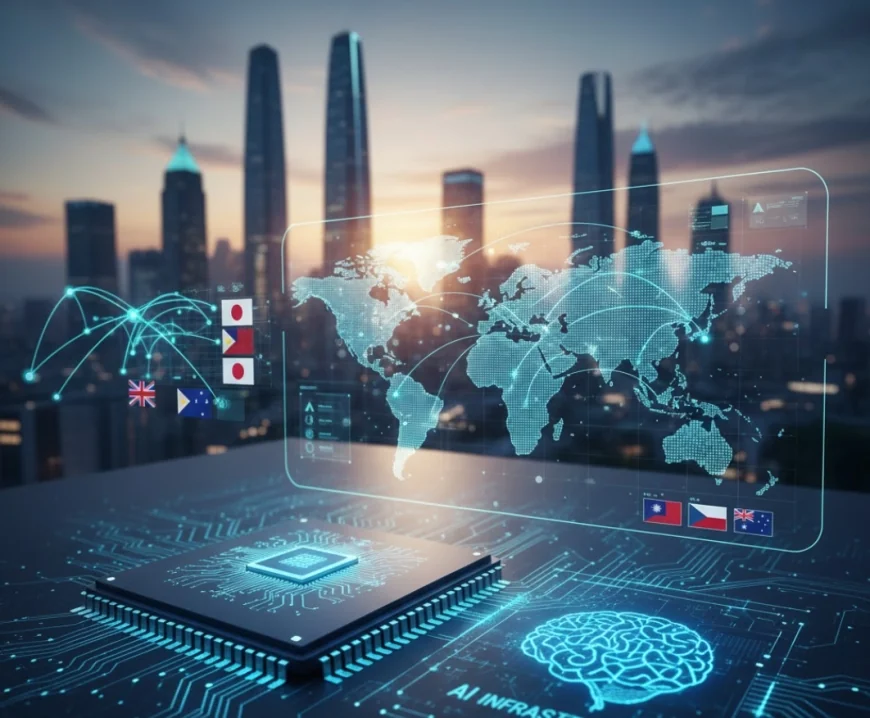
The ministry also worked to deepen semiconductor supply chain cooperation and exchanges with European nations, including Czechia, Italy, the Netherlands, and the U.K. This was underscored by the signing of the Taiwan-U.K. Memorandum of Understanding on the Semiconductor Joint Skills Project.
Furthermore, progress was made on expanding Taiwan’s participation in the U.S.-Japan-Philippines Luzon Economic Corridor. This aligns with the broader objective of pursuing joint development in a third region under the Taiwan-U.S. Economic Prosperity Partnership Dialogue framework, the MOFA confirmed.
Finally, the ministry continued to leverage trade and economic diplomacy to advance the Ten Major AI Infrastructure Projects initiative, aiming to transform Taiwan into a global economic powerhouse.