





















































































































Subtle risk emerges in US dollar funding markets amid stock market swings
While attention focuses on the US stock correction—which saw the Nasdaq drop 4.4%—a more serious risk is tightening in the US dollar funding markets. Driven by the Fed's quantitative tightening and the Treasury's cash build-up, stress in the repo market is pushing SOFR rates higher, threatening hedge fund "basis trades" and posing a systemic threat to global financial stability, particularly for non-US banks.

With high-tech stocks having just suffered their worst two weeks since April, the world’s attention has largely focused on equity markets. Yet, a more subtle—and potentially more consequential—risk is emerging in US dollar funding markets. Stress here could ripple through the international financial system, posing a threat to global financial stability.
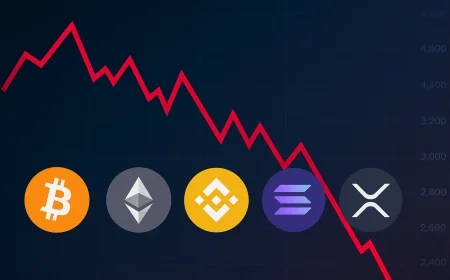
US stock indexes have indeed taken a hit. Over the past two weeks, the S&P 500 fell 3 percent, while the tech-heavy Nasdaq dropped 4.4 percent. The decline has been attributed to a correction in stretched valuations of tech stocks, particularly the “Magnificent Seven.” Despite recent declines, the S&P 500 still shows a 15 percent year-to-date gain, and many observers view the correction as a healthy development. In this context, it is arguably more important to monitor stress in the US dollar funding markets, which could pose risks to investors and investment strategies reliant on abundant dollar funding at relatively low interest rates.
Pressures in Repo Markets Could Spell Trouble
In its effort to normalize monetary policy, the Federal Reserve (Fed) has reduced its balance sheet through quantitative tightening. Combined with the US Department of the Treasury raising its cash position, this has contributed to mounting tightness in the repo markets, which reached a gross size of $11.9 trillion in 2024.
This tightness has pushed the Secured Overnight Financing Rate (SOFR)—a benchmark for borrowing against Treasury securities—well above the Interest on Reserves Balances (IOEB), which is usually considered the ceiling for overnight rates. The SOFR-IOEB spread has recently been the widest since 2020.
As the repo market is a key source of US dollar funding for banks, money market funds, and hedge funds, rising repo rates could undermine the cost-benefit calculus behind many institutions’ investment strategies. For instance, rising rates threaten hedge funds relying on the repo market to fund basis trades—which use significant leverage to short Treasury futures while going long Treasury cash. Rising rates could trigger losses, forcing hedge funds to unwind trades and fire-sell US Treasuries used as collateral, potentially having a destabilizing effect on financial markets.
Global Contagion Risk
Stress in dollar funding markets also affects non-US banks, which held more than $15 trillion in dollar-denominated assets in 2022. European and Japanese banks, in particular, have become increasingly dependent on wholesale dollar funding, which is less stable than retail deposits. This dependency has risen as they have increased their US dollar assets to offset weak domestic loan demand.
Given their systemic importance, stress in the US dollar funding markets can transmit rapidly across borders. Historically, the Fed has stabilized dollar funding crises by injecting liquidity via currency swap lines. However, a degree of uncertainty has grown about the reliability of the world’s most powerful central bank stepping in during a future global crisis, particularly amid shifting political mindsets.
In the end, the real risk to investors and the global financial system may not lie in recent stock market swings, but in the combination of tightening US dollar funding conditions and concerns about the reliability of the global financial stabilizer.