

































































































































COP30 in Brazil: Climate Resilience as a Driver of Growth and Innovation
As the world prepares for COP30, set to take place in Belém, Brazil, from 10-21 November 2025, a new narrative is emerging in climate action: resilience and adaptation are not costs but profitable investments. This paradigm shift challenges conventional assumptions, demonstrating that tackling the climate crisis can accelerate economic growth, technological innovation, and societal well-being.
The Stakes: Urgency Meets Opportunity
2024 marked the hottest year on record, with the global average temperature surpassing 1.5°C above pre-industrial levels. Ahead of the February 2025 deadline for countries to submit updated Nationally Determined Contributions (NDCs), the UN Environment Programme warned that existing policies could still drive 3°C warming by 2100, threatening irreversible damage to Earth’s ecosystems.
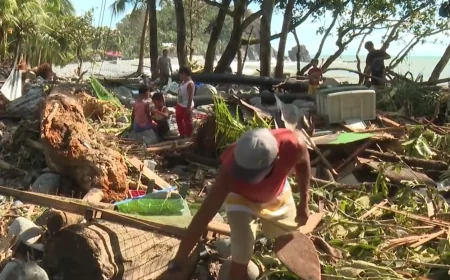
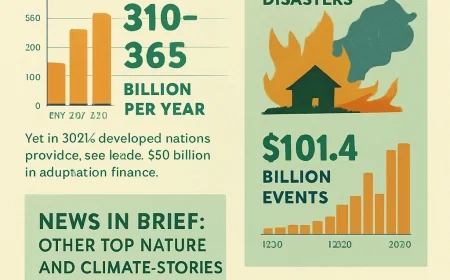
Currently, seven of nine planetary boundaries have been crossed, pushing Earth beyond its safe operating space. By 2050, climate change could contribute to 14.5 million additional deaths and a $1.1 trillion burden on global healthcare systems. Economically, climate disasters have cost $3.6 trillion since 2000, with damages doubling over two decades. Businesses that fail to adapt could see up to 7.3% of annual earnings lost by 2035, with 5-25% of 2050 EBITDA at risk from climate impacts alone.
Critical systems at imminent risk include the Greenland and West Antarctic ice sheets, warm-water coral reefs, Labrador and Irminger Seas convection, and boreal permafrost—all essential to global water, agriculture, and economic stability.
From Cost to Strategic Investment
The most transformative shift in climate thinking is recognizing that resilience yields extraordinary returns. Studies consistently show that $1 invested in adaptation can generate $2 to $19 in benefits. For example:
-
Standard Chartered: $1 spent on adaptation in emerging markets returns $12 in economic benefit.
-
US Chamber of Commerce: $1 invested in resilience saves $13 in damages and recovery costs.
-
World Resources Institute (WRI): $1 invested in 320 adaptation projects across 12 countries yields over $10.50 in benefits over 10 years, with average returns of 20-27%.
The Forum’s Alliance of CEO Climate Leaders, representing 130+ companies and $4 trillion in revenue, reduced aggregate emissions by 12% while achieving 20% revenue growth between 2019 and 2023—demonstrating that climate action and economic performance are not mutually exclusive.
Nature-Based Solutions and Societal Benefits
Investing in nature-based solutions offers a triple dividend: mitigating climate impacts, generating economic returns, and delivering social and environmental benefits. Nature-focused initiatives could create 395 million jobs globally by 2030, particularly in sustainable agriculture, ecosystem restoration, and agroforestry. Mangrove forests alone prevent an estimated $80 billion in annual coastal flood losses, protecting up to 18 million people.
Yet despite their proven potential, these solutions are critically underfunded, receiving only 1.5% of public international climate finance for adaptation in developing countries. Strategic investment in ecosystems improves air and water quality, reduces pollution-related health risks, and fosters community resilience against extreme weather.
Emerging Technologies Accelerating Solutions
Technological innovation is unlocking unprecedented opportunities to address climate risks:
-
Precision fermentation can reduce greenhouse gas emissions by 72-97%, cut water use by 81-99%, and lower land use by up to 99% compared to conventional animal proteins.
-
Green ammonia production using renewable electricity could replace energy-intensive fertilizer production, lowering emissions in agriculture.
-
Modular geothermal energy offers continuous, low-footprint renewable power, providing baseload energy for communities and grids.
Collectively, these solutions could expand the climate adaptation investment opportunity from $2 trillion today to $9 trillion by 2050, with $1 trillion available for private capital by 2030.
Scaling Impact Through Finance and Collaboration
The transition demands innovative financing and partnerships. Mechanisms like parametric insurance, voluntary carbon markets, and multi-stakeholder collaborations are crucial to scale adaptation projects, address Scope 3 emissions, and integrate systemic solutions. Businesses like Schneider Electric, Vestas, DHL, and BBVA exemplify how cross-value chain collaboration can deliver scalable climate resilience.
Systems thinking and urban innovation frameworks, such as the Forum’s Water-BOOST toolkit, help cities identify gaps, align funding, and deploy effective interventions.
The Path Forward
COP30 presents an opportunity to reframe climate action as a driver of prosperity. Leaders are urged to:
-
Invest in emerging and proven technologies for immediate and long-term impact.
-
Scale adaptation and resilience initiatives, recognizing their strategic value.
-
Harness the climate economy for measurable economic, social, and environmental returns.
The evidence is clear: climate action pays off—the challenge is whether global leaders can act swiftly enough to capture this historic opportunity.