





































Las Vegas police debut Tesla Cybertruck fleet amid concerns over private influence
Las Vegas, Nov. 2, 2025 — The Las Vegas Metropolitan Police Department will begin deploying a fleet of Tesla Cybertrucks this month, marking the largest police fleet of its kind in the United States. The vehicles were donated by billionaire venture capitalist Ben Horowitz, sparking debate over the growing intersection between private interests and public law enforcement.
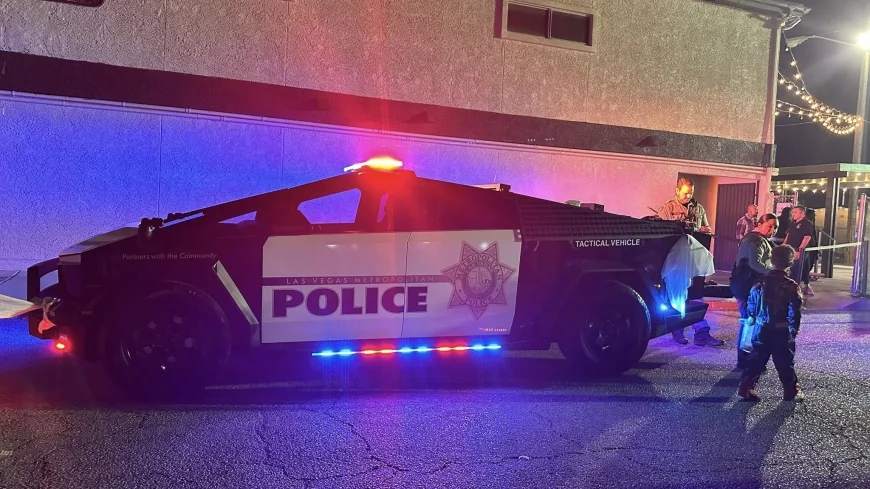
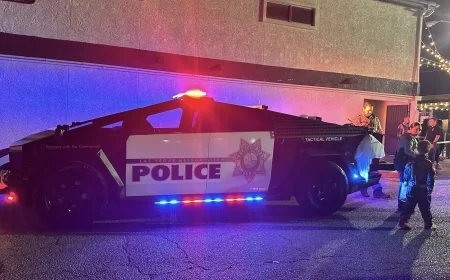
“Welcome to the future of policing,” Clark County Sheriff Kevin McMahill said at a press conference, standing before ten black-and-white Cybertrucks adorned with police insignia, as drones hovered overhead and a police helicopter circled the sky.
The all-electric vehicles, each valued between $80,000 and $115,000, are equipped with shotguns, shields, ladders, and expanded battery capacity to meet policing demands. Roughly 400 officers have been trained to operate them, using public charging stations throughout Las Vegas. McMahill said the bulletproof Cybertrucks would improve officer safety and efficiency.
“They represent innovation, sustainability, and our commitment to serving the community with the best tools available — safely, efficiently, and responsibly,” McMahill said.
However, watchdogs and civil rights advocates have raised concerns about the optics and implications of private donations from prominent business figures — particularly given Tesla’s close association with politics and recurring safety issues.
The donation, worth roughly $2.7 million, came from Ben Horowitz, co-founder of Silicon Valley venture capital firm Andreessen Horowitz (a16z), and his wife, Felicia Horowitz. The couple, Las Vegas residents, have previously funded several police technology initiatives, including the city’s Project Blue Sky drone program and emergency response systems tied to firms in which a16z has investments.
Government ethics experts have warned that such donations may blur the line between corporate philanthropy and brand promotion, especially as Tesla continues to face regulatory scrutiny.
Earlier this year, Tesla recalled nearly all Cybertrucks on U.S. roads due to defects, including loose windshield panels and overly bright headlights that increased crash risks. The National Highway Traffic Safety Administration (NHTSA) said over 63,000 vehicles were affected in the latest recall. Police officials stated that all recalled components were replaced before the vehicles entered service and emphasized that the modified Cybertrucks lack Tesla’s self-driving feature, which remains under federal investigation.
Civil rights groups expressed concern that the futuristic vehicles could signal increased surveillance capabilities and contribute to police militarization. “Cybertrucks on the streets seem designed for intimidation, not safety,” said Laura Martin, executive director of the Progressive Leadership Alliance of Nevada Action Fund.
Athar Haseebullah, executive director of the ACLU of Nevada, warned that the vehicles could allow Tesla access to police operational data. “This donation draws a troubling parallel between private corporate power and public law enforcement,” he said.
Despite criticism, experts noted that private donations of equipment are not illegal unless restricted by local laws. “There’s no distinct tactical advantage beyond being free and saving taxpayers money,” said Ed Obayashi, a California prosecutor and police practices expert.
Sheriff McMahill defended the partnership, crediting the Horowitzes for their ongoing commitment to public safety. “They want to ensure Las Vegas doesn’t become California when it comes to crime,” he said.