




























































































































US reportedly weighing sweeping new software export curbs targeting China
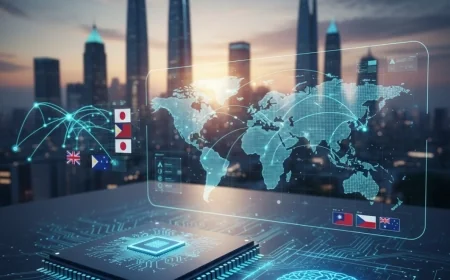
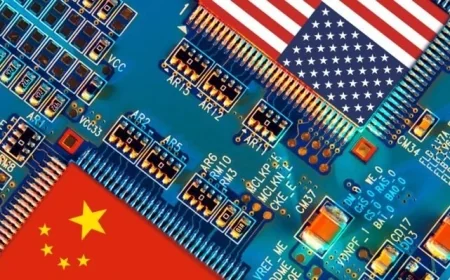
The United States government is reportedly preparing a far-reaching set of export controls that could prohibit a wide range of products made with US-developed software from being shipped to China — a move that analysts say could reshape global technology supply chains and intensify the economic rivalry between Washington and Beijing.
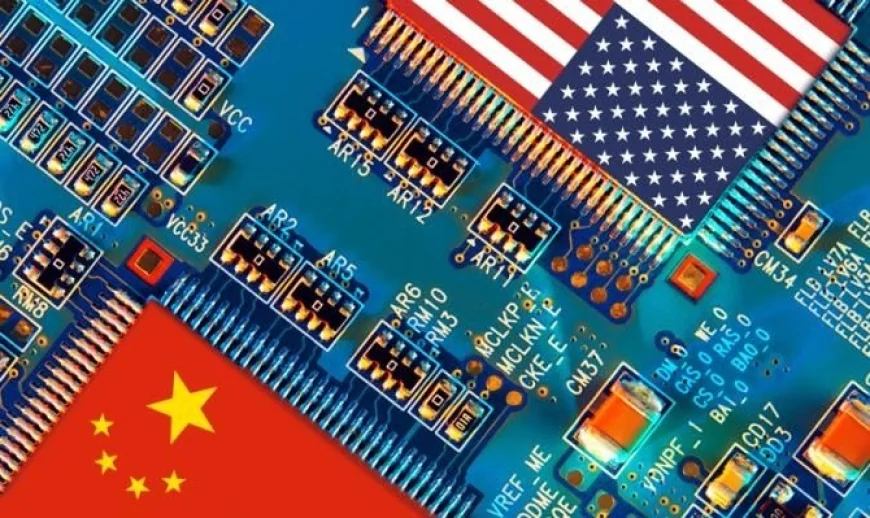
According to a Reuters report, the proposal — still under internal discussion — forms part of a broader strategy to counter China’s recently imposed restrictions on rare earth exports. If enacted, it would extend existing export control frameworks to include any item manufactured anywhere in the world that uses US-origin software, from laptops to jet engines.
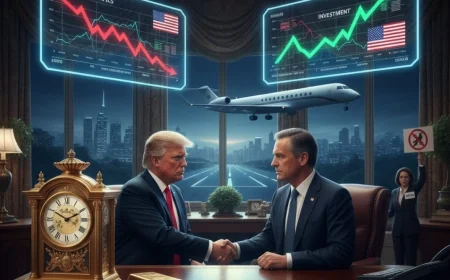
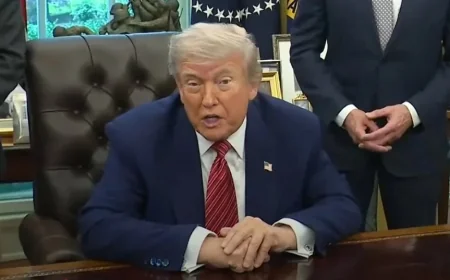
The measure would mark one of Washington’s most sweeping trade actions to date and comes as the Trump administration signals a tougher stance on Beijing ahead of a scheduled meeting between President Donald Trump and Chinese President Xi Jinping later this month.
Software as a new front in the tech Cold War
US officials reportedly view software as a critical point of leverage in the global technology race, given China’s dominance in the rare earth materials essential to electronics manufacturing.
“Software is the backbone of the modern digital economy — from design and development to the management of hardware systems,” said Neil Shah, vice president for research at Counterpoint Research. “Tighter export controls will only accelerate the fragmentation of global tech ecosystems.”
Washington has already tightened restrictions on electronic design automation (EDA) tools, requiring vendors like Cadence, Synopsys, and Siemens EDA to secure export licenses before selling to Chinese firms. Earlier this month, President Trump also announced plans to double tariffs on Chinese imports and introduce new curbs on what he termed “critical software” by November 1.
Disruption to global supply chains
Industry analysts warn that the proposed curbs could significantly disrupt manufacturing operations and global trade.
“Every complex product today — from a car and turbine to a chip — depends on US-built design and automation tools,” said Sanchit Vir Gogia, chief analyst at Greyhound Research. “Removing those dependencies isn’t a matter of swapping suppliers; it means rethinking the entire digital infrastructure of production.”
The compliance challenge for multinational manufacturers would be enormous. Companies may be required to prove that no part of their design, production, or logistics processes relies on US software — a task experts say is nearly impossible to verify at scale.
“This will create cascading effects, from incompatibility issues and intellectual property conflicts to compliance bottlenecks,” Shah added. “The impact won’t be limited to China — it could restrict US companies’ reach in other global markets as well.”
Strategic and long-term implications
Analysts caution that using software as a tool of strategic pressure could ultimately weaken US influence in global technology governance.
“Such measures risk eroding America’s leadership in the global software ecosystem,” said Prabhu Ram, vice president of industry research at Cybermedia Research. “Both US and Chinese companies will respond by diversifying sourcing and accelerating domestic innovation to mitigate exposure.”
Charlie Dai, principal analyst at Forrester, noted that China’s push for technological self-reliance will likely gain new momentum. “Compliance risks for US enterprises will grow, while market access could shrink — reducing overall competitiveness,” he said.
Experts say the broader message is clear: the era of seamless global tech integration is giving way to a new phase of geopolitical and technological fragmentation.
For companies operating in this shifting landscape, the priority will be to build resilient and transparent supply chains, develop localized software ecosystems, and reinforce strategic innovation to navigate what many are calling the next phase of the global tech Cold War.