



































































The rise of “Vibe Work”: How AI is redefining corporate culture
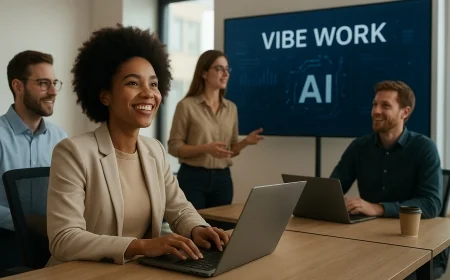
In 2025, the corporate world is vibing—literally. What started as a trend in generative AI coding has expanded into broader corporate applications, with companies increasingly using the term “vibe” to describe work aided by AI. From software development to marketing, executives and startups are experimenting with AI-driven workflows, framing them as effortless, improvised, and creatively liberating.
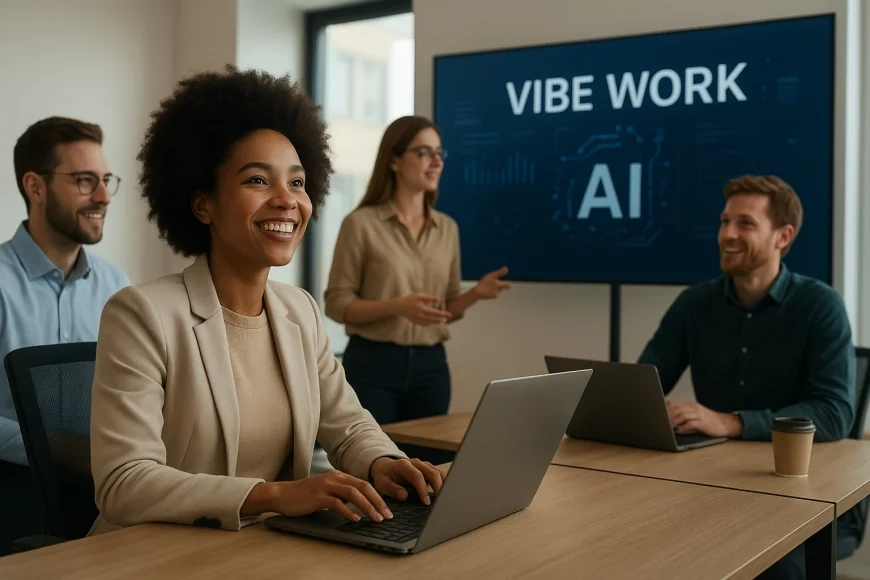
From Vibe Coding to Vibe Work
Generative AI first shook up the software industry by automating code-writing tasks, leading to the rise of “vibe coding.” Big Tech leaders have embraced the concept: Sundar Pichai demonstrated AI-assisted web design, Mark Zuckerberg predicted AI would replace mid-level engineering work, and Klarna CEO Sebastian Siemiatkowski described himself as an amateur coder thanks to AI. Startups are now launching entirely through AI-assisted processes, highlighting the growing appetite for “vibe coders.”
The trend has spread beyond coding. Companies are now hiring roles like “Vibe Growth Manager”, tasked with rapidly prototyping marketing campaigns and experimenting with AI tools. Last month, Microsoft introduced “vibe working,” enabling employees to “speak Excel” and “vibe write” in Word—creating and refining documents without deep software expertise. Meanwhile, Meta offers a “vibes” feed for AI-generated video, and platforms like Sora are enabling a new class of AI content creators, replacing traditional influencer content with synthetic imagery produced in a few clicks.
The Culture of Vibing
The language of vibes conveys more than AI usage; it signals a cultural shift. Vibing suggests work is improvised, easy, and fluid, borrowing from Gen Z slang once used for socializing. Companies have adopted “vibe checks” in team meetings, experimented with Chief Vibe Officer roles, and even incorporated celebrity partnerships like Smirnoff and Troye Sivan to promote the concept.
Yet, experts caution that vibe work remains work. Mastery of AI-assisted processes requires experimentation, skill, and oversight. Emily DeJeu, professor at Carnegie Mellon’s Tepper School of Business, compares vibe work to jazz: effortless on the surface, but dependent on years of expertise. Overemphasizing the ease of AI can undermine the value of professional skill, potentially leading to exploitation if employers rely on workers’ expertise while framing it as casual “vibing.”
AI Skills in High Demand
Despite the playful language, AI competence is increasingly non-negotiable. A 2024 Microsoft report found that 71% of business leaders would hire a less experienced candidate with AI skills over a more experienced worker without them, and two-thirds would reject applicants lacking AI knowledge. Yet fewer than a third of workers have received formal AI training, according to Jobs for the Future, creating a skills gap that employees are often filling themselves.
Workers are experimenting independently, learning by trial and error—a process reminiscent of the early days of the internet. But the results are inconsistent. Without strategy, AI outputs can range from useful insights to overly polished but meaningless reports or presentations. Experts urge workers to combine AI with clear objectives, research, and planning, rather than relying solely on generative AI to produce work.
The Limits of Vibes
Even in coding, vibe AI has not eliminated labor. Developers now spend more time reviewing and debugging AI-generated code, shifting rather than reducing their workload. In marketing, AI can consolidate data and generate drafts, but human oversight remains essential to ensure strategic coherence.
The trend reflects broader workplace shifts. Gen Z employees value flexibility over formal loyalty, with concepts like “quiet quitting” and “lazy girl jobs” illustrating a departure from traditional 9-to-5 expectations. Vibe work may appeal to this demographic, offering the appearance of ease and creativity, even if the underlying tasks remain demanding.
Bottom Line
Vibe work is a cultural and technological phenomenon, blending generative AI tools with playful corporate language. It signals innovation and experimentation, but it does not replace the need for expertise, strategy, or labor-intensive effort. Companies may market AI-driven workflows as effortless vibes, but employees and executives alike must recognize that work—vibed or not—remains complex, skill-dependent, and real.