



































































































































2025: The Year the World Came Onchain
After nearly two decades of development, crypto is moving from adolescence into maturity, embedding itself into the global financial system. Since the first State of Crypto report, the industry has more than doubled in value, while blockchain infrastructure has become faster, cheaper, and more reliable, signaling a new era of adoption and economic relevance.

Crypto’s Growth and Global Adoption
In 2025, the total crypto market cap surpassed $4 trillion for the first time. Active crypto users grew to an estimated 40–70 million, up 10 million from last year, while global crypto ownership reached 716 million, a 16% increase. Yet the majority of these holders remain passive, highlighting opportunities for builders to convert ownership into active, onchain usage.
Mobile wallet activity is surging in emerging markets such as Argentina, Colombia, India, and Nigeria. Argentina, in particular, has seen a 16-fold increase in mobile wallet usage over three years amid economic instability. In contrast, developed nations like Australia and South Korea show higher interest in trading and token speculation.
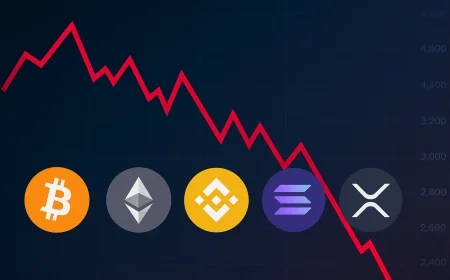
Bitcoin, which remains over half of crypto’s total market capitalization, reached an all-time high of $126,000, while Ethereum and Solana regained much of their post-2022 losses. Hyperliquid and Solana now account for 53% of revenue-generating blockchain activity, reflecting a shift from Bitcoin and Ethereum dominance.
Institutional Adoption Accelerates
2025 marks a turning point for institutional crypto adoption. Major financial institutions, including Visa, BlackRock, Fidelity, JPMorgan, and Mastercard, now offer or plan to offer crypto products. Fintech firms such as Stripe, PayPal, and Robinhood are building infrastructure for payments, stablecoins, and tokenized real-world assets.
Exchange-traded crypto products have surged to over $175 billion, up 169% from $65 billion the previous year. Publicly traded “digital asset treasury” (DAT) companies collectively hold about 4% of Bitcoin and Ethereum, bringing total institutional holdings—including ETPs—to roughly 10% of each token’s supply.
Stablecoins Go Mainstream
Stablecoins have become the backbone of the onchain economy. In the past year, $46 trillion in total transactions were conducted via stablecoins, with $9 trillion in adjusted, organic activity—surpassing PayPal and approaching Visa’s throughput. Monthly adjusted stablecoin transaction volumes reached $1.25 trillion in September 2025.
Tether and USDC account for 87% of the total stablecoin supply, which now exceeds $300 billion. Stablecoins hold over $150 billion in U.S. Treasuries, positioning them as a growing macroeconomic force and a potential stabilizer for dollar demand amid declining foreign holdings.
Regulatory Clarity Strengthens U.S. Crypto
The U.S. has embraced a more supportive regulatory framework with the GENIUS and CLARITY Acts, alongside Executive Order 14178. These measures create a foundation for stablecoins, market structure, and digital-asset oversight, allowing tokens to generate real economic value while balancing innovation and investor protection.
The World Comes Onchain
The onchain economy has expanded into multi-sector activity, with decentralized exchanges handling nearly one-fifth of all spot trading. Perpetual futures have surged eightfold, with platforms like Hyperliquid generating over $1 billion in annualized revenue. Tokenized real-world assets (RWAs), including Treasuries, money-market funds, and private credit, now total $30 billion.
DePIN (decentralized physical infrastructure networks) is emerging as a frontier for blockchain, reimagining sectors like telecom, energy, and transportation. The Helium network alone provides 5G coverage to 1.4 million daily active users.
NFTs and prediction markets are also growing, with platforms like Polymarket and Kalshi seeing trading volumes increase nearly fivefold since early 2025. Memecoin launches have cooled, reflecting a shift toward productive blockchain use cases.
Blockchain Infrastructure Nears Prime Time
Transaction throughput has grown 100x over five years, now exceeding 3,400 TPS across major networks. Solana’s low-fee architecture supports DePIN and NFT applications, while Ethereum’s L2s reduce transaction costs to less than one cent. Cross-chain bridges like LayerZero and Circle’s CCTP facilitate interoperability, handling billions in transfers annually.
Privacy protocols and zero-knowledge proof systems are gaining traction, with adoption by platforms like Zcash, Railgun, and Paxos. Post-quantum readiness is also underway, with $750 billion in Bitcoin addresses still requiring upgrades to secure against future quantum threats.
Crypto and AI Converge
AI’s rise presents opportunities for blockchain, including decentralized identity verification, autonomous agent payments, and IP licensing. Protocols like x402 could support AI microtransactions, potentially forming a $30 trillion market by 2030. While AI remains centralized around a few tech giants, crypto provides a decentralized counterbalance.
Looking Ahead
With regulatory clarity, growing institutional adoption, and robust infrastructure, crypto is positioned to mainstream global financial services. Stablecoins are transforming payments, RWAs bridge traditional finance, and consumer adoption is accelerating.
Seventeen years in, crypto has left adolescence behind and is entering a new phase of maturity—ready to upgrade financial systems, global payment rails, and the next generation of the internet.