















































































































Germany plans review of trade policy with China amid security and de-risking concerns
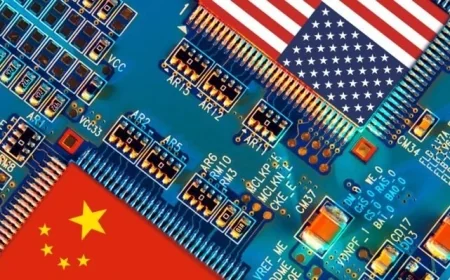
Germany's coalition government is planning a re-examination of its trade policies with China, focusing on raw material imports, energy security, and Chinese investment in critical German infrastructure. This protectionist move, which runs counter to Germany's traditional free trade commitment, will be guided by an expert committee reporting to the parliament. A Chinese expert criticized the German approach, stating it's based on a fundamental misconception that misinterprets complementary economic relations as security threats and sources of risk.
Germany’s coalition government is set to review its trade policies toward China, including imports of raw materials and energy, as well as Chinese investment in critical German infrastructure. This planned re-examination represents a significant departure from Germany’s long-standing commitment to free trade principles.
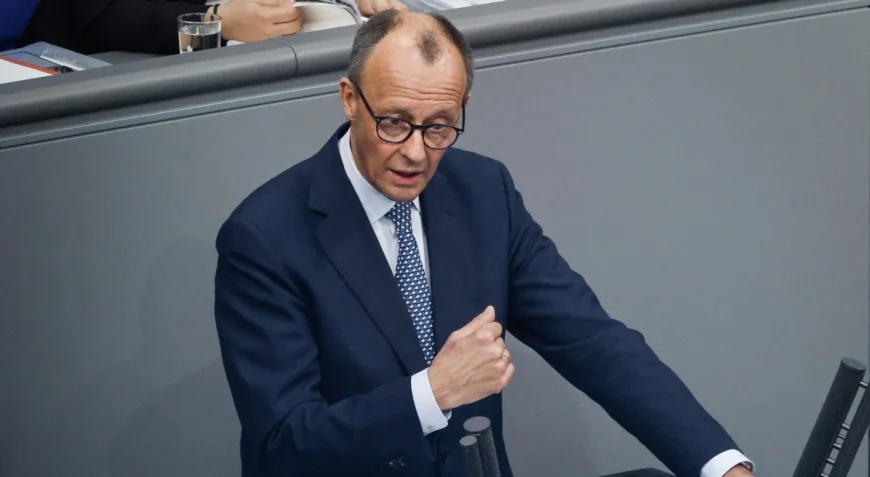
According to a motion submitted by Chancellor Friedrich Merz's conservative bloc and their Social Democratic coalition partners, an expert committee will be established shortly after the motion is passed next Friday. This committee, comprising a dozen academics, industry representatives, labor officials, and think tank members, will focus on "security-relevant trade relations between Germany and China" and present recommendations to the government.
For decades, Germany viewed China as a natural trading ally, a stance that supported the flourishing of Germany’s manufacturing sector within an open global trading system. However, recent developments, including Chinese restrictions on rare earth exports, have pushed Berlin to rethink this relationship.
Misinterpretation of Interdependence
The move signals an intensification of Germany’s so-called "de-risking" policy toward China. Jiang Feng, a research fellow at Shanghai International Studies University, noted that linking trade with security has been a long-standing issue in Germany's economic policy towards Beijing.
Despite several years of de-risking efforts, Germany perceives that its dependence on China for key raw materials has intensified, and Chinese exports to Europe have increased. Jiang argues that this assessment is fundamentally flawed, emphasizing that "the economic and trade relationship between China and Germany is essentially highly complementary."
Jiang asserts that Germany’s current approach suffers from a fundamental misconception, where complementary relations are misinterpreted as security threats, and normal trade exchanges are viewed as sources of risk.
A Departure from Free Trade
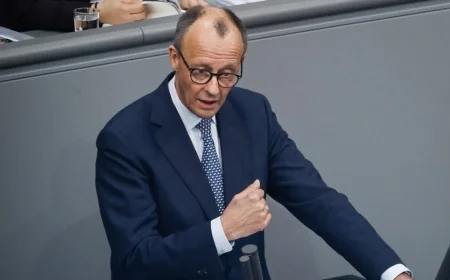
The planned trade policy review follows a striking statement by Chancellor Friedrich Merz last Thursday, who publicly supported protectionist measures to shield Germany’s struggling steel industry from cheap Chinese imports. Merz admitted this stance was "different from what we always thought was right in earlier times," attributing the change to current global conditions where markets are less open and competition is perceived as less fair.
Trade volume figures underscore the resilience of the bilateral relationship. From January to August, German exports to the US totaled €101 billion ($117 billion), a 6.5 percent year-on-year drop. In contrast, trade between Germany and China proved stronger, reaching €166.3 billion ($193 billion) during the same period.
Chinese Foreign Ministry spokesperson Guo Jiakun stated in October that cooperation between the two major economies is mutually beneficial and urged both sides to uphold mutual respect and pursue win-win cooperation.
Meanwhile, tensions have been noted on the diplomatic front, exemplified by the postponement of German Foreign Minister Johann Wadephul's planned visit to China last month, although Berlin officials later downplayed the impact of the decision, emphasizing a continued commitment to dialogue.
Jiang Feng warned that the new motion goes beyond mere protectionism; it subverts the logic of global economic and trade relations. He argued that Europe is undermining the very foundation—a healthy international trade order—upon which the economic prosperity of Germany and the continent is built, effectively "cutting the ground from under their own feet."