


























































































































Europe risks falling behind in AI race due to over-caution, warns DeepL CEO
Despite calls for caution from AI pioneers, including one of the original inventors of Siri, a debate is intensifying in Europe over whether the continent is being too risk-averse regarding artificial intelligence, potentially jeopardizing future economic competitiveness.

This discussion dominated the recent Web Summit in Lisbon, where the new industry buzzword, "agentic AI," was prevalent. Agentic AI refers to systems capable of performing specific tasks autonomously (like booking flights or managing customer interactions).
The Risks of Agentic AI
Babak Hodjat, now Chief AI Officer at Cognizant and an inventor of the technology behind Siri, emphasized that while AI agents are not new (he developed the technology in the 1990s), users are "over-trusting [AI]" and taking its responses at face value. He warned that it is incumbent upon everyone to learn the boundaries of these systems.
New or not, AI agents are thought to carry magnified risks compared to general-purpose AI because they interact with and modify real-world scenarios. The IBM Responsible Technology Board noted in a 2025 report that agentic AI introduces new risks, such as an agent modifying a dataset or database in a way that introduces undetected bias, with potentially irreversible impacts.
The European Regulatory Stance
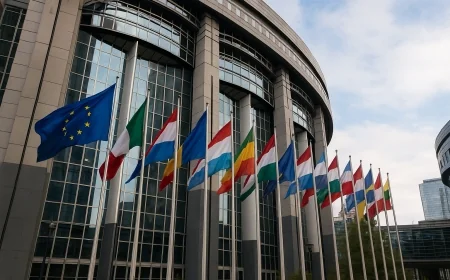
This inherent wariness is particularly strong in Europe, which has adopted a more cautious approach than the US. The EU AI Act, strict regulations governing how companies can and cannot use AI, came into force this year.
Jarek Kutylowski, CEO of German AI language giant DeepL, argues that Europe is taking the caution too far. While he agrees that grappling with the risks is necessary, he believes the greater, more existential threat is falling behind in the global AI race.
Kutylowski warned: "I see definitely a much larger risk in Europe being left behind in the AI race... You won't see it until we start falling behind and until our economies cannot capitalise on those productivity gains that maybe other parts of the world will see."
He believes that technological progress cannot be stopped and urged a pragmatic embrace of what is coming, arguing that caution should not override the enormous potential for productivity gains and innovation.