







































































































































Australia caps international university enrolments to prioritize domestic students
Australia has introduced new enrolment rules requiring universities to maintain a majority of domestic students on campus, with Australian students making up more than 50% of total enrolments. This decision, following a rapid surge in international admissions at major institutions, is set to reshape the study-abroad landscape for thousands of Indian students. The move reflects the government's effort to promote sustainable internationalization while addressing housing shortages and migration management concerns.
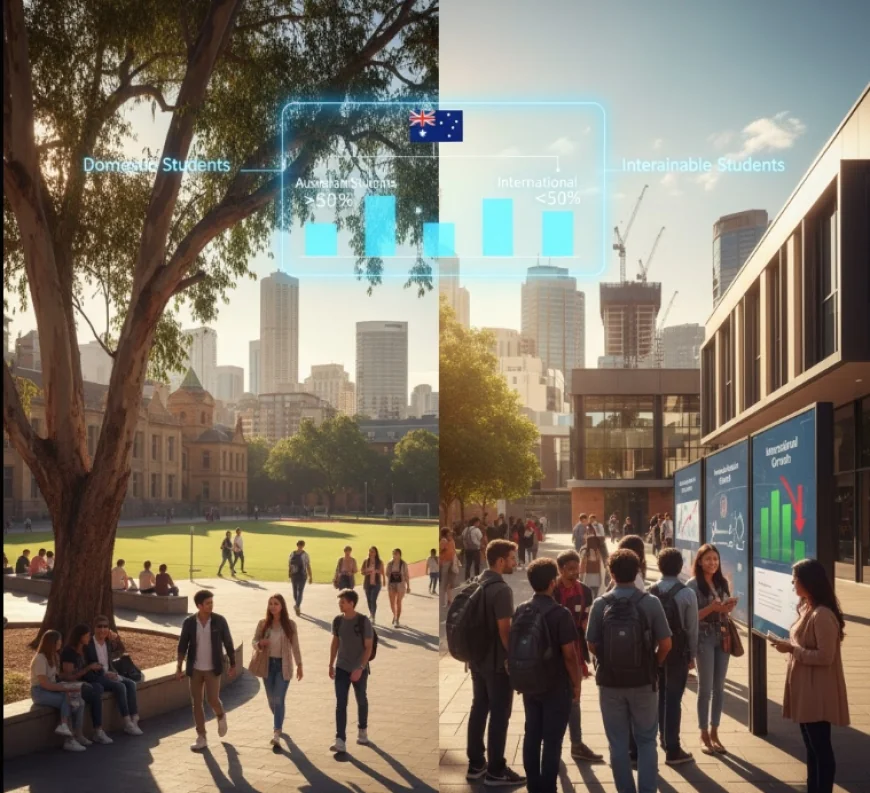
Australia has announced new enrolment rules requiring universities to maintain a majority of domestic students on campus, a strategic move set to reshape the study-abroad landscape. The Education Minister confirmed that Australian students must now constitute more than 50% of total enrolments at all universities.
This decision follows a rapid surge in international admissions, particularly from India, at several top institutions where foreign student numbers recently exceeded the 50% threshold. Several major universities recorded international enrolments between 44% and 57% in 2024.
Impact on Indian Students
India is the second-largest source of international students in Australia, accounting for approximately 17% of all foreign enrolments. The new cap is expected to restrict the number of seats available for upcoming intakes, especially in high-demand fields such as engineering, IT, healthcare, and business.
Despite this, experts suggest the measure does not signal a decline in opportunities for Indian students, but rather a recalibration of the system. International education remains a major Australian export sector, contributing significantly to the national economy and supporting over a quarter of a million jobs.
Analysts note that the new limit reflects the government’s efforts to address broader concerns, including housing shortages, migration management, and post-study work policies, without undermining Australia’s global appeal as a study destination.
Strategic Shift
The government’s directive underscores a strategic shift toward "sustainable internationalization"—prioritizing quality over volume. Moving forward, institutions will be expected to:
-
Expand student housing capacity before increasing overseas enrolments.
-
Develop more diverse student cohorts, with stronger engagement from South and Southeast Asia.
-
Maintain transparent policies regarding tuition, accommodation, and local integration.
Advice for Indian Aspirants
Australia remains a top choice for Indian students due to its world-class universities and the availability of 2–4 year post-study work opportunities. However, applicants may face tighter competition for 2026 intakes.
To remain competitive, students should:
-
Apply early for 2026 sessions.
-
Focus on high-demand programs, such as data science, health sciences, and renewable energy.
-
Explore regional universities, which often offer robust post-study visa options and increased scholarship support.
The cap signals a new phase in Australia’s higher education strategy—one that seeks to protect domestic access while preserving global connections. For Indian students, this means increased planning and competition, but also continued opportunity, provided they adapt early to the evolving admission landscape.