



























































































































APEC leaders pledge stronger regional cooperation after U.S.–China trade thaw
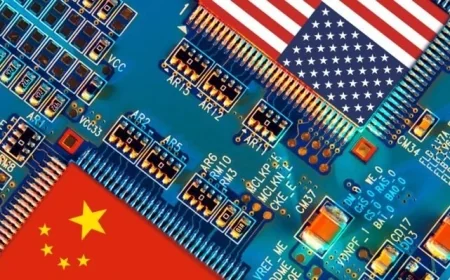
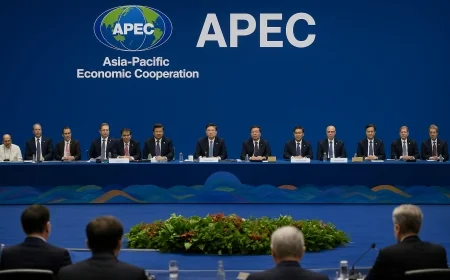
GYEONGJU, South Korea — Leaders from 21 Asia-Pacific Rim nations concluded their annual Asia-Pacific Economic Cooperation (APEC) summit in Gyeongju on Saturday with a joint statement emphasizing economic cooperation and shared responsibility amid a fragile global recovery. The meeting came just days after U.S. President Donald Trump and Chinese President Xi Jinping agreed to ease their long-running trade dispute.
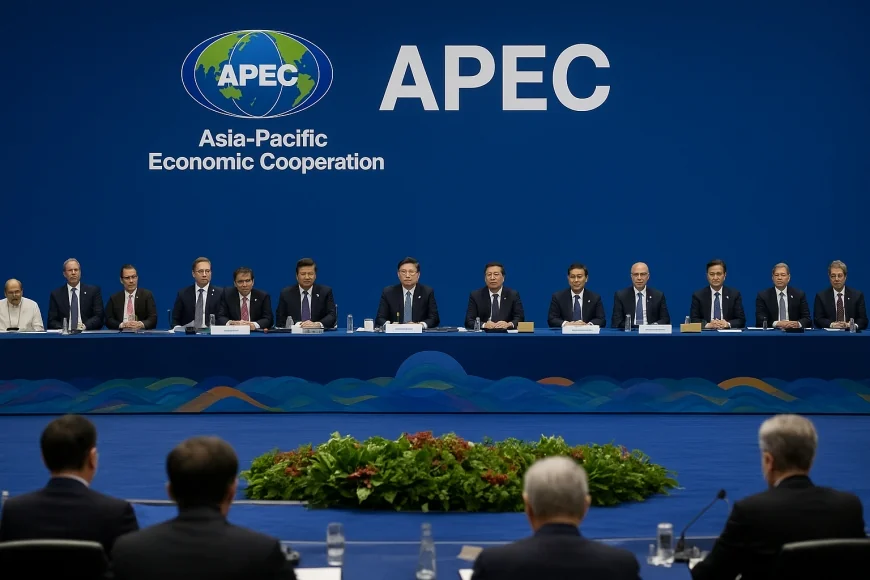
After two days of discussions, APEC leaders pledged to work collectively to strengthen trade, investment, and economic resilience in the face of persistent global uncertainties. The statement noted that the international trading system “continues to face significant challenges,” while reaffirming that “robust trade and investment are vital to the growth and prosperity of the Asia-Pacific region.”
U.S.–China thaw sets tone
The tone of the summit shifted after Trump and Xi met on Thursday, agreeing to de-escalate their trade tensions. While Trump, known for his skepticism toward multilateral forums, departed South Korea soon after, Xi seized the opportunity to take center stage, promoting China’s commitment to global trade and stability.
Chinese President Xi told the APEC gathering that “investing in China is investing in the future,” pledging support for global supply chains and free trade. He also held bilateral meetings with leaders from Japan, Canada, Thailand, and South Korea.
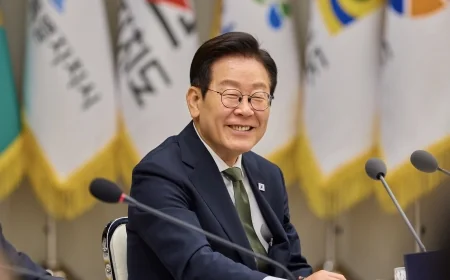
South Korean President Lee Jae Myung met with Xi on Saturday to discuss regional stability and denuclearization of the Korean Peninsula. Lee, a long-time advocate of reconciliation, said Seoul would take “active preemptive steps” to reduce tensions with the North, calling peace “essential to the prosperity of the Asia-Pacific region.”
North Korea, not a member of APEC, denounced the discussions. Vice Foreign Minister Pak Myong Ho criticized Seoul’s “daydream” of denuclearization, warning that Pyongyang would continue to pursue its nuclear ambitions despite international pressure.
Broader agenda: AI, demographics, and cultural industries
Beyond trade, the APEC summit addressed emerging global issues such as artificial intelligence, demographic shifts, and cultural industry cooperation. Two additional statements issued Saturday called for a coordinated approach to AI development—acknowledging both its economic potential and regulatory challenges—and for stronger collaboration to tackle aging populations, declining birth rates, and urbanization pressures.
The leaders also reaffirmed their commitment to the Putrajaya Vision 2040, a 20-year roadmap adopted in 2020 that envisions a “free, open, fair, non-discriminatory, transparent and predictable” trade environment.
APEC’s evolving role
Founded in 1989, APEC has long served as a platform to promote regional integration and free trade. However, recent years have tested its unity, with rising geopolitical tensions, supply chain disruptions, and diverging national interests challenging its mission.
The latest summit sought to revive confidence in multilateral cooperation despite deepening U.S.–China rivalry. Analysts say that while the joint declaration avoided explicit language endorsing “free and open trade,” it nonetheless reaffirmed APEC’s role in fostering economic collaboration.
As the region faces the twin pressures of technological transformation and demographic change, leaders emphasized that sustained cooperation remains the best path toward inclusive and resilient growth.