





































































































































Europe’s ALBATOR Project Targets Space Junk with Contact-Free Debris Removal Technology
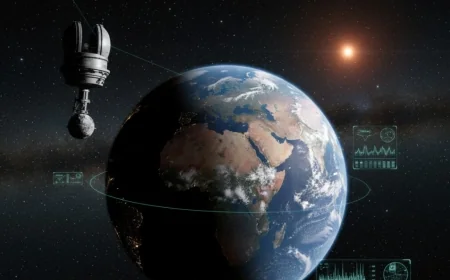
A European-led initiative is taking a bold new approach to one of the biggest challenges in modern spaceflight — orbital debris. Instead of physically grabbing or towing defunct satellites and fragments, the project proposes to push them away from danger using beams of charged particles.

The project, called ALBATOR (short for ECR-Based Multicharged Ion Beam for Active Debris Removal and Other Remediation Strategies), is a €3.9 million ($4.6 million) early-stage research effort exploring how non-kinetic forces could move space junk out of the paths of working satellites or crewed spacecraft such as the International Space Station.
A Growing Threat in Earth’s Orbit
According to the European Space Agency (ESA), there may be up to 140 million pieces of debris orbiting Earth — some as small as a millimeter. While global tracking systems keep tabs on larger objects, smaller fragments can still damage satellites traveling at thousands of kilometers per hour.
As the number of satellite constellations grows — with companies like SpaceX launching hundreds of new spacecraft each year — so too does the risk of collision. Most active satellites can maneuver to avoid danger, but defunct or uncontrollable debris pose an escalating hazard.
Governments and companies worldwide are racing to find solutions, from legislation limiting orbital lifetimes to experimental cleanup missions.
ALBATOR’s Contact-Free Approach
Unlike methods that require physical capture, such as robotic arms or massive space nets, ALBATOR’s strategy relies on ion beam technology — streams of charged particles that can subtly alter the trajectory of debris from a safe distance.
“By avoiding the risks inherent in capture or docking, the project aims to provide a safer and more versatile solution to one of the greatest challenges facing space sustainability: the proliferation of debris in Earth’s orbit,” said NorthStar, one of the project’s partners, in a recent statement.
The concept would allow operators to nudge objects into new orbits or direct them toward controlled reentry, minimizing collision risks without the danger of direct contact.
European Collaboration and Ambitious Goals
Funded in September under the European Innovation Council (EIC) Pathfinder program, ALBATOR will run 3.5 years through February 2029. The initiative is coordinated by French startup Osmos X, which specializes in developing electric propulsion systems for future uncrewed spacecraft.
The project brings together research teams from Spain and Germany, along with NorthStar’s Luxembourg division, the European branch of the Canadian space situational awareness firm headquartered in Montreal.
The EIC Pathfinder program supports high-risk, high-reward “deep tech” projects with the potential to create new markets and advance scientific innovation. While no flight test has been scheduled yet, the goal is to demonstrate the technology in space before the end of the decade.
The Urgent Need for Orbital Cleanup
The National Oceanic and Atmospheric Administration (NOAA) warns that space debris is becoming a serious environmental concern. A 2024 study published in the Journal of Geophysical Research predicted that by 2040, the amount of debris entering Earth’s atmosphere from decaying satellites could rival natural meteor dust levels.
With orbital traffic accelerating and global dependence on satellites deepening — from navigation and communications to weather forecasting — the race is on to ensure Earth’s orbits remain safe and sustainable.
ALBATOR’s innovative approach could mark a turning point in space cleanup efforts, demonstrating how advanced physics and European collaboration might finally address one of the space age’s most pressing problems.