





















































































Mass crackdown on migrants follows European Union deal with Mauritania
Mauritania has launched a mass crackdown and deportation campaign targeting West and Central African migrants, coinciding with a €210 million migration partnership deal signed with the European Union (EU). Migrants in cities like Nouadhibou and Nouakchott face systematic arrests, detention in cruel conditions, and alleged extortion by police. Rights groups estimate thousands have been deported, including those with valid residence permits, as the EU pursues its policy of "border externalization" to curb irregular migration towards the Canary Islands.
A mass crackdown on migrants has been launched across Mauritania, leading to widespread arrests and deportations, particularly targeting workers from West and Central Africa. This campaign follows the signing of a substantial migration partnership agreement between the government and the European Union.
Prior to the crackdown, cities like Nouadhibou, Mauritania's second-largest city, attracted workers like Omar, a 29-year-old bricklayer from The Gambia, who found work on construction sites that paid two to three times more than back home. These earnings allowed him to support his family and pay for his siblings' schooling.
However, in August, the situation changed dramatically as the National Guard and police began systematic round-ups, targeting construction sites and eventually homes in neighborhoods with large migrant populations. To avoid capture, migrants without residence permits, like Omar, were forced to stop working, leading to severe financial distress.
Cruel Conditions and Alleged Violations
Reports from migrants caught up in the operation detail harsh experiences in detention and during deportation. The Mauritanian Association for Human Rights (AMDH) estimated that 1,200 people were deported in March alone, with approximately 700 of those possessing legal residence permits.
While the government has not publicly released deportation figures, the Interior Minister stated that authorities were fully within their rights to control the movement of foreigners and claimed that officers acted "with respect for human dignity," providing adequate provisions and allowing detainees to keep personal possessions. However, rights groups, opposition politicians, and migrants present a different account.
Migrants describe being held in crowded, unsanitary facilities where food access was severely limited, sometimes to a single piece of bread a day, and water came only from a small tap in the common toilet during infrequent breaks. Detainees were allegedly forced to urinate in shared buckets.
There are widespread accounts of extortion and corruption. Migrants were repeatedly arrested and then released only after paying bribes to police, with costs ranging significantly. Police were also accused of offering to bring food to detainees at extortionate prices.
EU Migration Partnership
The current large-scale crackdown is notably more intense than similar, smaller campaigns in 2009 and 2012. Observers note its timing, which occurred shortly after the President of the European Commission, Ursula von der Leyen, announced a €210 million migration partnership deal with Mauritania in February.
The financial package is intended to support security and "migration management," alongside investments in green energy, employment, and socioeconomic services. However, this agreement is viewed by experts as part of the EU's "border externalization" policy, which involves signing deals with North and West African nations to curb irregular migration from major departure points in Africa.
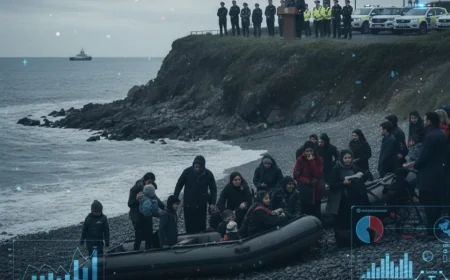
Mauritania is strategically important due to its proximity to Spain’s Canary Islands. Data indicates that in 2024, more than half of the islands’ irregular arrivals departed from Mauritanian shores.
The crackdown coincides with an October amendment to Mauritania's immigration law, which mandates the automatic expulsion of any foreign national convicted of not abiding by immigration regulations, with a re-entry ban of up to ten years. Prime Minister Mokhtar Ould Djay later described "the fight against illegal immigration" as a government priority. The European Commission insists it is in "constant dialogue" with Mauritania to ensure the partnership respects human rights.
Deportation and No-Man's Land
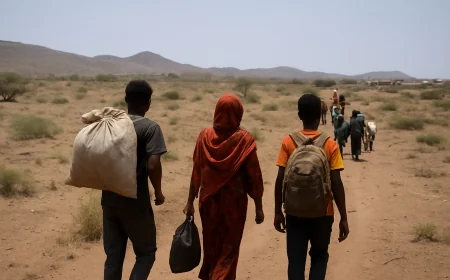
The deportation process involves transporting detainees, often chained together, south in buses to holding facilities in the capital Nouakchott, before being sent to border crossings like Rosso, the twin city on the border with Senegal.
Migrants recount being forcibly moved without being allowed to collect personal belongings, documentation, or money. Arrests have targeted men, but women and children have also been swept up. One mother was arrested while trying to buy medicine for her sick baby and held with her two young daughters in a detention facility, only released after her husband's boss paid a bribe.
At the Rosso border, many deportees, including those who technically had valid documentation like Omar, were refused entry into Senegal after admitting they had been deported. They became trapped in a no-man’s land near the Senegal River, forced to pay smugglers for small boats to circumvent border posts and police checkpoints. Others were even arrested by Senegalese police and sent back to the Mauritanian side, requiring further payments to cross the river again.
The constant threat of arrest and harassment has crippled the livelihoods of migrant workers. Many are now trapped: unable to earn a living in Mauritania and unable to afford the journey home. Omar, having returned to The Gambia, is struggling to find work and remains nostalgic for the regular income of his early days in Nouadhibou, vowing to return "If they stop deporting people."