

























































































































Google unveils plan to launch artificial intelligence datacenters into space
Google is developing a groundbreaking initiative, Project Suncatcher, to deploy artificial intelligence datacenters into low Earth orbit using solar-powered satellites. Engineers believe that falling launch costs could make space-based datacenters comparable in running costs to those on Earth by the mid-2030s. This approach aims to meet rising AI processing demand while minimizing the impact on terrestrial land and water resources, though it raises concerns about carbon emissions from rocket launches and light pollution for astronomers.
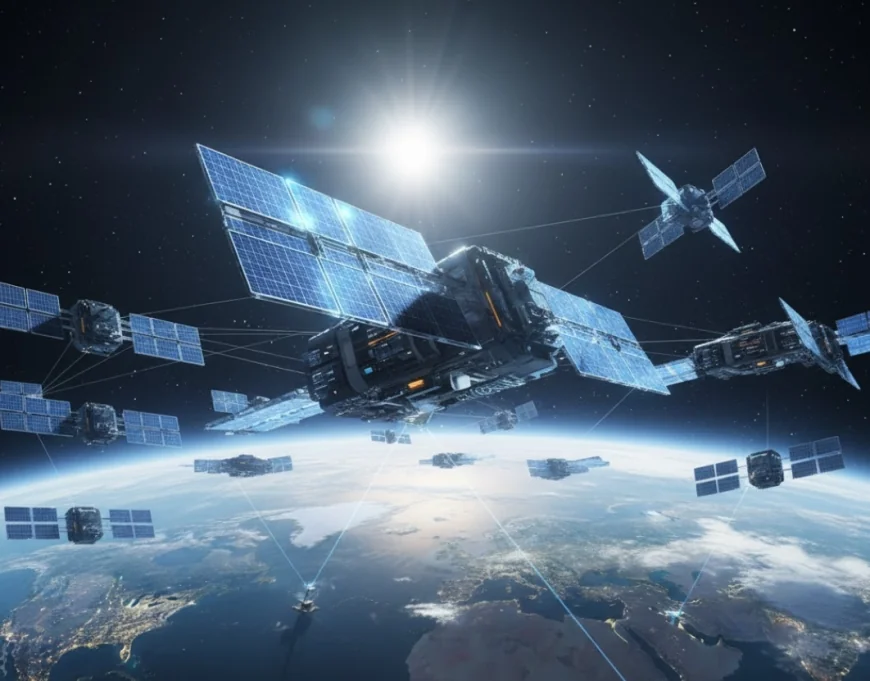
Google is planning to launch artificial intelligence datacenters into space, with initial trial equipment slated for orbit in early 2027. This ambitious project, dubbed Project Suncatcher, aims to capitalize on solar power and the rapidly falling costs of rocket launches.
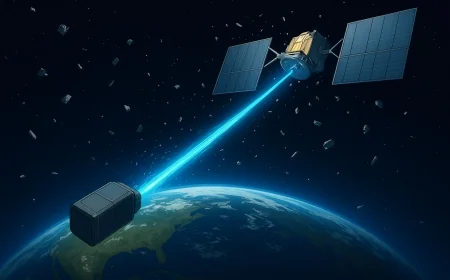
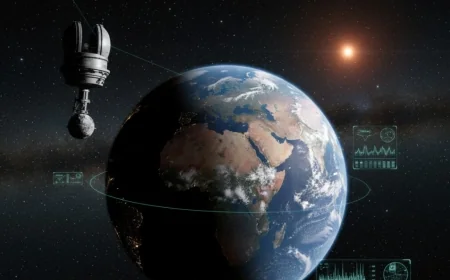
Engineers envision tightly packed constellations of approximately 80 solar-powered satellites positioned about 400 miles above Earth's surface. These satellites would be equipped with the powerful processors necessary to handle the escalating demands of artificial intelligence.
Research indicates that the running costs of a space-based datacenter could become comparable to those on Earth by the middle of the 2030s due to the decreasing price of space launches. Using orbiting satellites would also mitigate the extensive impact on the land and water resources required to cool terrestrial datacenters.
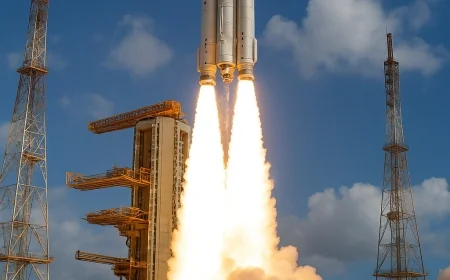
Once in orbit, these datacenters would be powered by solar panels offering up to eight times the productivity of those on Earth. However, the environmental benefit is tempered by the fact that launching a single rocket emits hundreds of tonnes of carbon dioxide.
The orbiting datacenters are designed to transmit their results back to Earth using free-space optical links, which rely on light or laser beams for wireless data transmission. The processors used will be Google TPUs (Tensor Processing Units), which are optimized for training and running AI models.
The global spending on earthbound datacenters, driven by major technology companies pursuing AI advancements, is projected to reach $3 trillion worldwide. This massive spending has heightened concerns about carbon emissions if sustainable energy sources are not secured for these sites.
Google suggests that "in the future, space may be the best place to scale AI computers." Other major players are also exploring this frontier: Elon Musk's companies, including Starlink and SpaceX, are planning to scale up space datacenters, and Nvidia AI chips are also scheduled for launch into space later this month in partnership with a startup.
Experts believe that in space, companies gain access to "almost unlimited, low-cost renewable energy," and that the overall carbon footprint, excluding the launch phase, could result in ten times the carbon dioxide savings over the datacenter's lifespan compared to terrestrial facilities.
Google plans to launch two prototype satellites by early 2027 as a "first milestone towards a scalable space-based AI." However, the company noted that significant engineering challenges remain, particularly concerning thermal management, high-bandwidth ground communications, and on-orbit system reliability. Furthermore, the rising number of satellites in low orbit has drawn objections from astronomers, who fear the light pollution will interfere with their ability to observe the universe.