



















































































































Romania poised to become Eastern Europe’s next energy hub: Black Sea gas reserves could reshape the regional map with Hungary as a strategic player
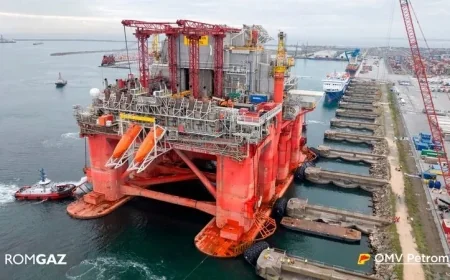
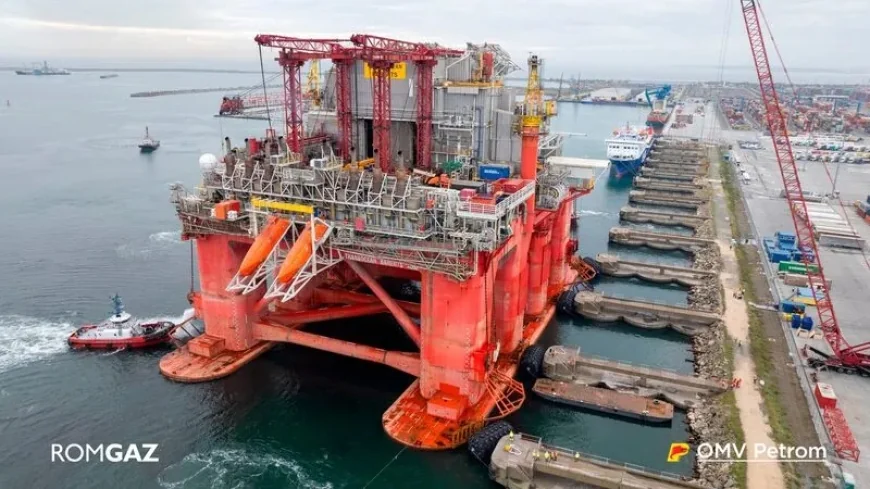
After nearly a quarter of a century of delays, Romania is on the verge of becoming a new regional energy powerhouse, as the long-awaited Neptun Deep gas project in the Black Sea nears completion. The venture — jointly developed by Romgaz and OMV Petrom — is expected to begin production in the first half of 2027, yielding around 8 billion cubic meters of natural gas per year. The output will not only cover Romania’s domestic consumption but also provide a surplus for export to neighboring countries.
A long road to extraction
The story of Romania’s Black Sea gas fields began in the early 2000s but was stalled for years by legal disputes, unstable legislation, and investor withdrawals. The maritime border conflict with Ukraine was only resolved in 2009 through a favorable ruling by the International Court of Justice. Subsequent amendments to the offshore law finally created the conditions for major foreign investment.
After ExxonMobil’s withdrawal between 2021 and 2022, OMV Petrom and Romgaz took full ownership of the project and launched drilling operations in March 2025 in the Pelican South and Domino blocks. Much of the infrastructure — including three subsea production systems and the main pipeline connecting to Tuzla — is already close to completion.
A new gas power in the region
Estimates suggest that combined production from the Neptun Deep and Ana projects could fully meet Romania’s annual gas demand, estimated at 12 billion cubic meters, allowing the country to export surplus volumes to Hungary, Moldova, and Bulgaria. Bucharest also aims to use this output to bolster Moldova’s energy independence, reducing its reliance on Russian gas.
A crucial component is the Tuzla–Podișor gas pipeline, inaugurated this autumn. Dubbed the “gas highway,” the 300-kilometer pipeline cost approximately €500 million and will connect offshore fields to the national grid, enabling large-scale regional exports.
Hungary’s strategic role
Romania and Hungary are already linked by the Arad–Szeged interconnector, an infrastructure that could help Budapest reduce its dependence on Russian imports. According to István Pataky, an analyst at the Oeconomus Economic Research Foundation, the flow of Romanian gas could stabilize the regional market and bring down prices.
Hungary’s substantial storage capacities could position it as a regional energy hub, managing part of Romania’s exports. Still, Bucharest remains cautious, prioritizing national supply security before committing to broader export deals.
Security challenges amid regional tensions
With ongoing military tensions in the Black Sea, the Neptun Deep project faces geopolitical and security risks, particularly due to hybrid threats from Russia. It remains unclear whether Romania’s offshore infrastructure falls under NATO’s direct protection, a topic currently under discussion within the alliance.
Despite these challenges, the exploitation of Black Sea gas could mark a turning point for Romania and the wider region, offering Central Europe a secure and nearby alternative to Russian energy supplies — and cementing Romania’s role as a key player in the continent’s evolving energy landscape.