



















































































Majority of Americans Say a Third Party Is Needed—But Few Would Actually Vote for One
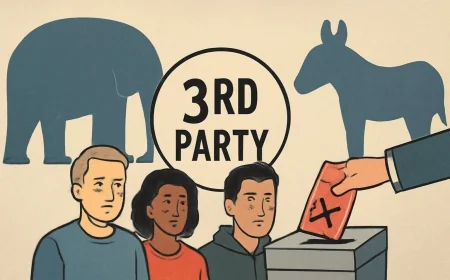
Despite growing dissatisfaction with the Republican and Democratic parties, most Americans remain reluctant to throw their support behind a third major political alternative, a new Gallup survey reveals.
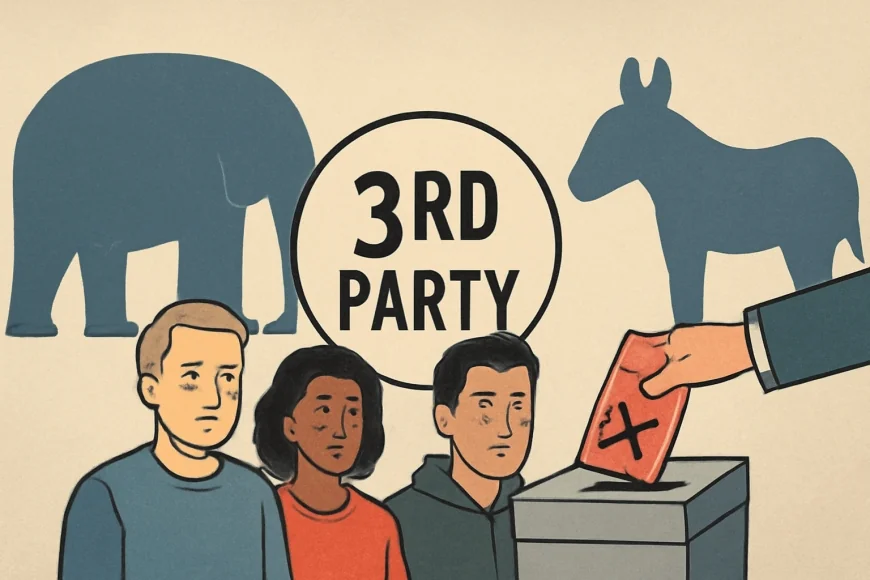
According to the poll, conducted September 2–16, 62% of U.S. adults believe a third political party is necessary because the two dominant ones are failing to represent the people effectively. That figure nearly matches the record-high 63% seen in 2023 and continues a decade-long trend of steady support for a potential third party.
However, Gallup’s follow-up questions expose a significant gap between sentiment and action. While 55% of respondents say they are at least somewhat likely to vote for a third-party or independent candidate, only 15% say they are very likely to do so. When faced with the prospect that their preferred candidate might have little chance of winning, a majority—54%—say they would switch their vote to one of the major-party candidates instead.
Persistent Desire for Alternatives
The survey shows that frustration with the two-party system is widespread, particularly among independents. Three in four independents (74%) say a third party is needed, compared with 58% of Democrats and 43% of Republicans. Historically, support for third-party alternatives tends to rise among partisans whose preferred party is out of power.
Age also plays a role: younger Americans are more open to political alternatives. About seven in ten adults under 50 favor a third party, compared to 61% of those aged 50–64 and 48% of seniors 65 and older.
Even among voters who still view one or both major parties favorably, a slim majority (54%) agree that the system could benefit from a new political force.
Commitment Gap and Voter Hesitation
Gallup’s supplemental web survey sheds light on why this longstanding appetite for a third party rarely translates into meaningful electoral support. Only 11% of Americans appear genuinely committed to voting for third-party candidates—even if those candidates are unlikely to win.
That hesitation largely stems from fear of unintended consequences. 57% of respondents say they are “extremely” or “very” concerned about wasting their vote on a losing candidate, and 59% worry about inadvertently helping elect their least preferred candidate.
While independents are somewhat less anxious about those risks, roughly half still share similar concerns. Democrats express the greatest apprehension, while younger adults are generally more comfortable accepting the risk of a “spoiled vote.”
Deep Frustration, Limited Action
The findings underscore a paradox in American politics: the widespread belief that a new party is necessary to fix the system, coupled with a reluctance to challenge the status quo.
Analysts note that while structural barriers—such as single-member congressional districts and the Electoral College—make third-party success difficult, voter psychology may be an even greater obstacle. The pervasive belief that a vote for an outsider is a “wasted vote” perpetuates the two-party dominance.
Until that perception changes, the survey suggests, the notion of a viable third party will likely remain more of an aspiration than a reality.