

































































































































One in Six Global Infections Now Antibiotic-Resistant, WHO Warns in 2025 Report
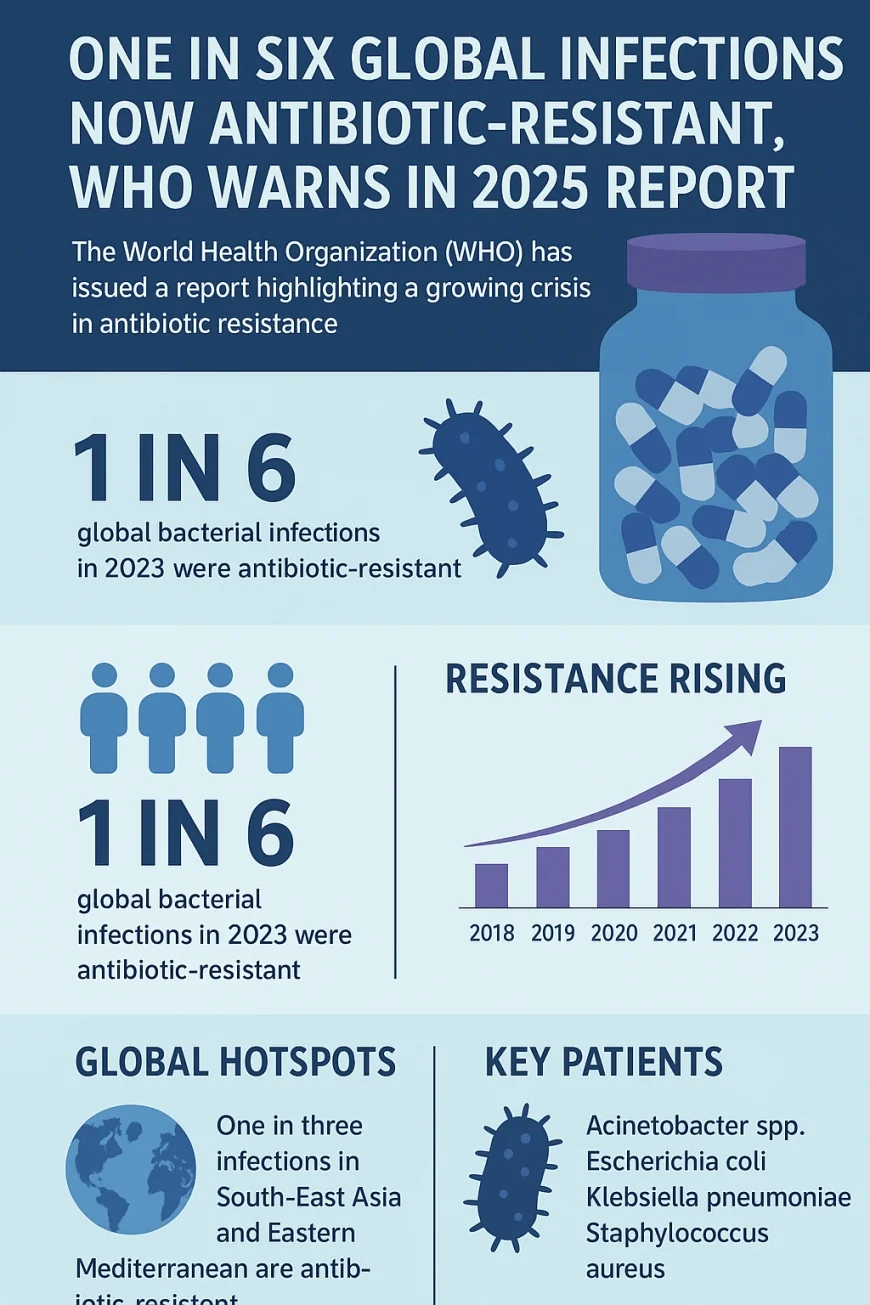
A World Health Organization (WHO) report released today reveals a growing global crisis in antibiotic resistance, warning that one in six bacterial infections worldwide in 2023 no longer respond to standard antibiotic treatments. The findings highlight an alarming trend: between 2018 and 2023, resistance rose in over 40% of pathogen-antibiotic combinations, with annual increases of 5–15%, posing a severe threat to global health.
Resistance Rising Across Key Pathogens
Drawing on data from over 100 countries through the Global Antimicrobial Resistance and Use Surveillance System (GLASS), the Global Antibiotic Resistance Surveillance Report 2025 offers the most comprehensive picture yet of resistance patterns in 22 major antibiotics used to treat urinary, gastrointestinal, bloodstream, and sexually transmitted infections.
The report focuses on eight key bacterial pathogens – Acinetobacter spp., Escherichia coli, Klebsiella pneumoniae, Neisseria gonorrhoeae, non-typhoidal Salmonella spp., Shigella spp., Staphylococcus aureus, and Streptococcus pneumoniae – all of which contribute to widespread, life-threatening infections.
Global Hotspots: South-East Asia and Eastern Mediterranean Hit Hardest
Resistance rates vary widely by region. The WHO estimates that one in three infections in the South-East Asian and Eastern Mediterranean regions are resistant to antibiotics, compared with one in five in the African Region. Areas with weaker healthcare infrastructure, limited diagnostic capacity, and restricted access to effective medicines face the greatest risks.
“Antimicrobial resistance is outpacing modern medicine, threatening the health of families worldwide,” said Dr Tedros Adhanom Ghebreyesus, WHO Director-General. “We must strengthen systems to prevent, diagnose, and treat infections, use antibiotics responsibly, and invest in next-generation drugs and rapid diagnostics.”
Gram-Negative Bacteria: The Growing Global Threat
The report identifies Gram-negative bacterial pathogens—particularly E. coli and K. pneumoniae—as posing the greatest danger to global health. Both are leading causes of bloodstream infections that can trigger sepsis, organ failure, and death.
Globally, more than 40% of E. coli and over 55% of K. pneumoniae are now resistant to third-generation cephalosporins, the standard treatment for such infections. In the African Region, resistance levels surpass 70%, leaving doctors with few effective options.
Other frontline antibiotics, including carbapenems and fluoroquinolones, are also losing effectiveness. Carbapenem resistance, once rare, is now spreading rapidly, forcing reliance on expensive, last-resort antibiotics that are often unavailable in low- and middle-income countries.
Surveillance Progress and Persistent Gaps
Since the launch of GLASS in 2016, participation has grown four-fold—from 25 countries to 104 by 2023—marking a significant step in global surveillance. However, nearly half of countries still failed to report data last year, and many lacked the laboratory capacity needed to generate reliable results.
Countries facing the greatest health challenges often have the weakest AMR surveillance systems, hindering effective responses.
The 2024 UN General Assembly political declaration on AMR set targets for countries to adopt a “One Health” approach, integrating efforts across human, animal, and environmental health sectors. WHO urges nations to strengthen laboratory systems, expand surveillance networks, and report high-quality AMR and antimicrobial use data to GLASS by 2030.
The Road Ahead: Coordinated Global Action
To curb the accelerating threat of antimicrobial resistance, WHO calls for:
-
Responsible antibiotic use and stronger infection prevention in healthcare and communities.
-
Investment in next-generation antibiotics, vaccines, and rapid molecular diagnostics.
-
Alignment of treatment guidelines and essential medicines lists with local resistance data.
-
Expanded data sharing and transparency through the GLASS digital dashboard, which now provides detailed regional analyses and antimicrobial use profiles.
Without urgent and coordinated global action, WHO warns, the world could enter a post-antibiotic era where once-treatable infections once again become deadly.