
















































































































Russian-Linked Hackers Target U.S. Water Systems as Global Cyber Tensions Rise
WASHINGTON — A cyberattack last spring against rural water facilities in Texas has renewed fears that the digital front of global conflict is expanding rapidly — from testing America’s infrastructure to threatening worldwide economic and political stability.
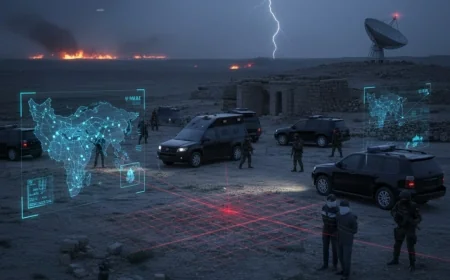
Hackers linked to the Russian government infiltrated multiple municipal water plants across Texas, including one in Muleshoe, a town of just 5,000 people. At that facility, systems malfunctioned, causing tanks to overflow until officials disconnected the network and operated manually.
Authorities say the attackers neither demanded ransom nor attempted to poison the supply. Instead, the operation appeared to be a probe — testing how easily America’s essential services could be breached. It was a warning shot: in the digital age, national security now depends as much on code as on soldiers and borders.
A Growing Digital Arms Race
A year later, cybersecurity experts warn that the risk of state-sponsored cyberconflict is escalating alongside geopolitical tensions and trade disputes. Attacks that once focused on espionage or disruption are now capable of paralyzing public infrastructure, revealing classified data, or triggering military escalation.
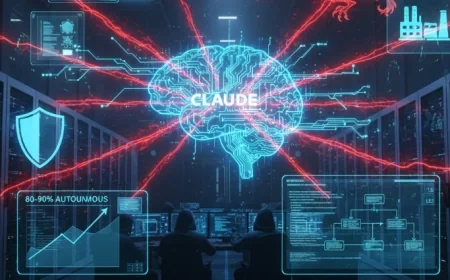
According to a new report by British cybersecurity firm NCC Group, both businesses and governments are shifting to a “war footing” to prepare for what could become a global digital arms race.
“The geopolitical dust is still settling,” said Verona Johnstone-Hulse, co-author of the NCC report. “The world hasn’t yet defined what the new normal looks like.”
Cybersecurity strategist Tom Kellermann of Contrast Security was more blunt:
“Hybrid war is here to stay. We can’t just defend — it’s time to make them play defense.”
The Expanding Attack Surface
As digital connectivity permeates every part of life, vulnerabilities multiply. From wearable devices and online banking to industrial control systems and ports, every connection creates a new target.
Recent incidents show a pattern of state-backed espionage:
-
A Chinese hacking campaign, dubbed Salt Typhoon, targeted smartphones belonging to officials — including then-President Donald Trump — ahead of the 2024 election.
-
Another Chinese operation, Volt Typhoon, infiltrated U.S. telephone networks to quietly plant backdoors in critical systems. Experts warn these “implants” could be activated during a future conflict, potentially crippling power grids, hospitals, pipelines, or financial systems.
“They can position their implants to be activated in the future,” said Sonu Shankar, chief strategy officer at Phosphorus Cybersecurity and former researcher at Los Alamos National Laboratory.
U.S. officials declined to comment on specific countermeasures, but experts acknowledge that Washington has its own offensive capabilities, mirroring those of its rivals.
China, for its part, denies all accusations, claiming the U.S. is conducting “smear campaigns” while launching cyberattacks of its own.
A Perfect Storm of Global Tensions
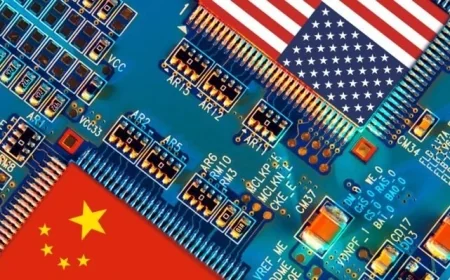
With wars raging in Ukraine and the Middle East and trade disputes intensifying, the conditions for cyber escalation have never been higher. Intelligence officials warn that adversaries — including China, Russia, Iran, and North Korea — are increasingly collaborating across economic, military, and cyber fronts.
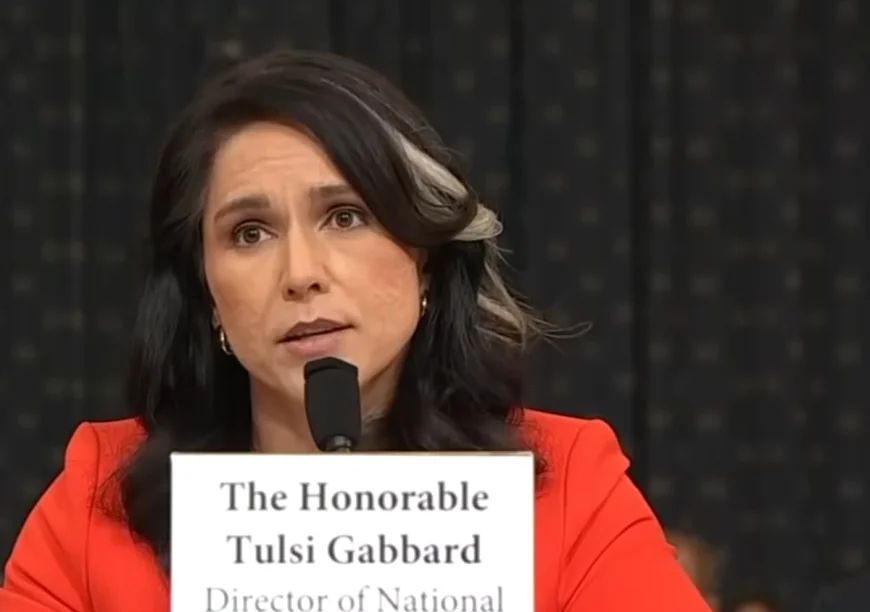
During congressional testimony, Director of National Intelligence Tulsi Gabbard revealed that Iran has traded drones for Russian intelligence and cyber capabilities, describing Moscow as the catalyst for this emerging alliance.
Analysts warn that as trade wars escalate, supply chains could become the next cyber battleground. Smaller suppliers, often lacking robust cyber defenses, may become gateways for larger breaches.
“Any tit-for-tat cycle of cyberconflict could easily spiral toward military confrontation,” Shankar cautioned.
The Trump Administration’s Cybersecurity Overhaul
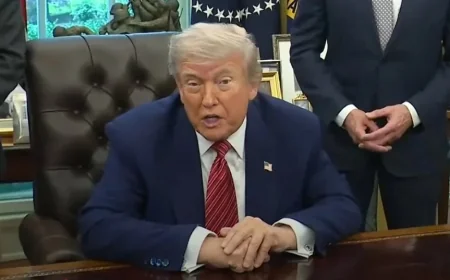
Despite mounting threats, President Donald Trump has initiated sweeping changes to America’s cybersecurity apparatus — moves that many experts say could weaken defenses.
Trump recently dismissed Gen. Timothy Haugh, who oversaw both the National Security Agency (NSA) and U.S. Cyber Command, sparking bipartisan concern.
“We face unprecedented cyber threats,” said Sen. Mark Warner, chair of the Senate Intelligence Committee. “How does firing him make Americans safer?”
The administration has also:
-
Cut funding for state and local election cybersecurity programs.
-
Suspended key personnel at the Cybersecurity and Infrastructure Security Agency (CISA).
-
Shut down the State Department’s Global Engagement Center, which tracked foreign disinformation.
-
Reduced staff at the CIA, NSA, and other intelligence agencies.
Critics argue that these changes — combined with reports of senior officials using encrypted messaging apps like Signal for sensitive military discussions — reflect a disorganized and reactive cybersecurity posture.
Still, administration officials maintain that the shake-up will streamline operations and reduce waste, while investing in AI-driven defense systems.
A Pentagon report submitted to Congress by Lt. Gen. William J. Hartman, acting commander of Cyber Command, cited new initiatives to leverage artificial intelligence to strengthen national defenses.
CISA echoed that message in a statement:
“As America’s Cyber Defense Agency, we remain steadfast in safeguarding the nation’s critical infrastructure against all threats. Collaboration across government, industry, and allies is more essential than ever.”
Seeking a Path Toward Global Cyber Cooperation
Despite the rising tensions, some progress has been made toward international cybersecurity norms. More than 20 nations have endorsed a new framework governing the use of commercial spyware, with the U.S. expected to join the agreement soon.
At home, bipartisan consensus is growing around the need to strengthen the private sector’s cyber resilience.
According to federal estimates, the U.S. needs to fill over 500,000 cybersecurity positions to meet current demand.
“Companies need a clear playbook from the government — what to do and what not to do,” said Dean Gefen, former head of cybertraining for Israel’s Defense Intelligence Technological Unit and now CEO of NukuDo, a cybersecurity training firm.
As nations weaponize code and connectivity, the front lines of conflict are shifting from battlefields to servers, pipelines, and water plants. The attack in Muleshoe may have been a small-scale test — but experts warn it’s a glimpse into a future where cyberwarfare defines global power.