































































































































Global markets one year after Trump’s return: from record highs to new risks
Nov. 3, 2025 — One year into Donald Trump’s second presidency, global financial markets are still adjusting to policy shocks, unpredictable trade moves, and renewed volatility. Stocks, gold, and cryptocurrencies have all hit record highs, while investors continue to navigate what analysts call “the Trump effect.”

When Trump defeated Democratic rival Kamala Harris on November 5, 2024, the U.S. dollar, stocks, and bitcoin surged, and Treasury yields climbed, reflecting expectations of aggressive fiscal spending and increased borrowing. Since then, Trump’s administration has struck a series of controversial trade deals, reshaping supply chains and straining post-war diplomatic norms.
Investors have learned to anticipate Trump’s unpredictable behavior — threatening aggressive policy action before backtracking — giving rise to what traders now dub the “TACO trade”: Trump Always Chickens Out.
The Dollar Dips, Bitcoin and Gold Shine
The U.S. dollar initially spiked after Trump’s victory, but has since lost around 4% of its value. While optimism about economic growth briefly boosted the greenback, ongoing tariff uncertainty and global instability have pushed investors toward alternative assets.
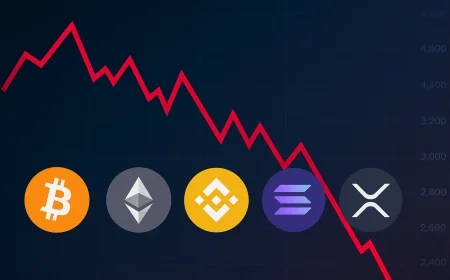
Bitcoin — benefiting from Trump’s crypto-friendly stance and his administration’s deregulatory push — hit an all-time high of $125,835.92 in October. Gold, another traditional safe haven, also soared to a record $4,381 per ounce, driven by geopolitical tensions and fears over trade disruptions.
Despite these shifts, analysts say global demand for dollars remains strong, with investors turning to it in moments of turbulence — “the cleanest dirty shirt,” as Piotr Matys of In Touch Capital Markets put it.
Stocks Soar Despite Trade Turbulence
Equities have defied the chaos. The MSCI World Index has climbed more than 20% since Election Day, recovering from a sharp 10% drop after Trump’s “Liberation Day” tariff announcement in April. The S&P 500 is up 17% year-on-year, powered by the artificial intelligence boom and expectations of lower global interest rates.
In Europe, defense and energy stocks have surged as Trump’s foreign policy pressures NATO allies to boost military spending. Meanwhile, Asian markets — particularly in Japan, South Korea, and China — have benefited from a softer dollar and tech-led growth.
Tesla’s Political Rollercoaster
Tesla’s stock became an unexpected barometer of Trump’s political alliance with Elon Musk. Musk, who spent more than $250 million supporting Trump’s reelection campaign, saw Tesla shares nearly double to a record $488.5 within two months of the election.
But public backlash over Musk’s role in Trump’s government — particularly after he launched the “Department of Government Efficiency (DOGE)” — dented the carmaker’s image. Sales declined for two consecutive quarters, and tensions between the two men culminated in a public split by late May.
Despite the volatility, Tesla remains the world’s most valuable automaker, outperforming legacy rivals like GM, Ford, and Stellantis.
Bond Yields and Fiscal Fears
Government bond yields have risen globally, reflecting investor concern over swelling deficits. Trump’s signature tax package — dubbed “One Big Beautiful Bill” — is projected to expand the U.S. deficit by $3.8 trillion over the next decade.
Thirty-year U.S. Treasury yields now stand at 4.66%, up 14 basis points since November 2024. Japanese long-term bonds have climbed even more sharply, up 85 basis points, while French and German yields have risen 62 and 59 points, respectively.
Tariffs and Trade Balancing
Trade remains Trump’s defining economic battleground. He continues to argue that the U.S. is being “ripped off” by its partners and that tariffs — which he calls “the most beautiful word in the dictionary” — are key to restoring balance.
The strategy appears to be shrinking the U.S. trade deficit, which fell to $60.2 billion in June — its lowest in two years. The deficit with China, in particular, has dropped 70% over five months, reaching its smallest gap in more than two decades.
However, European exporters have been hit hard. Analysts like Ipek Ozkardeskaya of Swissquote suggest the U.S.-EU trade war “may be hurting the EU more than China,” as Europe lacks comparable resilience or diversification in its trade portfolio.
One year on, global markets are adapting to Trump’s brand of economic disruption — one that blends stimulus, nationalism, and unpredictability. The challenge for investors, economists say, is to navigate a landscape where political volatility has become the new normal.