

























































































A difficult and uncertain global economic outlook: The world needs more multilateralism
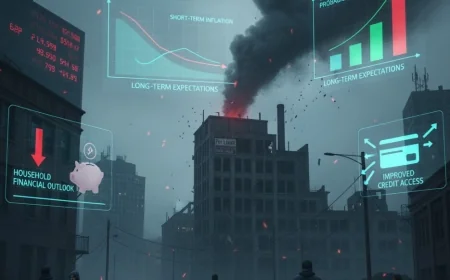
The latest update of the Brookings-FT TIGER (Tracking Indexes for the Global Economic Recovery), released in October 2025, paints a picture of a global economy that appears stable on the surface but remains deeply unsettled beneath. According to the report, household and business confidence continue to be weighed down by uncertainty over trade policy, political instability, and persistent geopolitical volatility.
Advanced economies are contending with rising debt burdens, aging populations, and political gridlock, while emerging markets — despite temporary relief from a weaker U.S. dollar — are showing mounting signs of strain.
Global pressures mounting
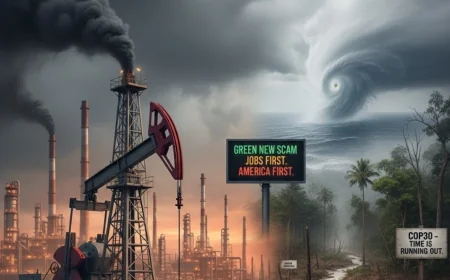
In reality, the global economic outlook is far from “benign.” The accelerating climate crisis, with increasingly frequent and devastating disasters in vulnerable nations such as Pakistan, is placing immense pressure on growth and fiscal stability. These climate shocks have emerged against a backdrop of geopolitical fragmentation and lingering aftershocks from the COVID-19 pandemic, which triggered the deepest global recession in decades.
Emerging economies have faced additional challenges. While a softer dollar offered some cushion to foreign exchange reserves, the benefits have largely been offset by rising debt-servicing costs, driven by higher global interest rates and austerity policies tied to external loans. Domestically, many central banks — including Pakistan’s — raised policy rates to attract volatile foreign portfolio investment, intensifying the fiscal strain through ballooning interest payments.
Austerity and debt distress
The austerity-first approach, often promoted under neoliberal policy frameworks, has not only failed to curb debt accumulation in advanced economies but has also deepened debt distress across much of the developing world. The pandemic-era spike in inflation — caused by both lockdown-induced recessions and supply chain disruptions — demanded supply-side reforms and investment. Instead, most governments focused narrowly on monetary tightening and fiscal restraint, aggravating inequality and stifling growth.
The resulting picture is bleak: global growth remains sluggish, debt repayments are surging, and many economies are grappling with stagnation. The absence of strong multilateral cooperation — particularly in debt relief and concessional financing — has amplified these vulnerabilities. Limited allocations of the International Monetary Fund’s (IMF) Special Drawing Rights (SDRs) to developing countries have left many without sufficient fiscal space to invest in recovery or climate resilience.
IMF outlook: protectionism and policy shifts
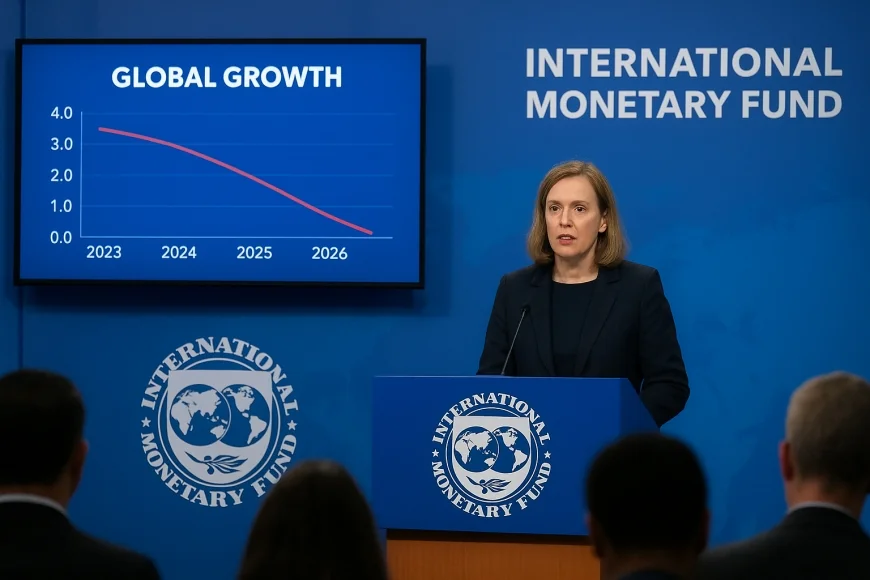
The IMF’s October 2025 World Economic Outlook (WEO) underscores these challenges. “The rules of the global economy are in flux,” the report notes, highlighting growing protectionism, fragmentation, and weak medium-term growth prospects. The Fund projects global growth to slow from 3.3% in 2024 to 3.2% in 2025 and 3.1% in 2026 — a modest improvement since July’s update, yet still 0.2 percentage points below forecasts prior to recent policy shifts.
For Pakistan, the data are sobering. From 2007 to 2016, real GDP growth averaged just 3.5% — barely above the population growth rate. Over the subsequent decade (2017–2026), growth is projected to dip slightly to 3.4%, excluding the impact of recent floods still being assessed. Even the forecast for 2030, at 4.5%, offers little optimism, suggesting structural challenges will persist well into the next decade.
Rethinking neoliberalism
The global economic malaise underscores the urgent need to move beyond the neoliberal orthodoxy that has shaped economic policymaking since the 1980s. Excessive faith in markets, fiscal austerity, and deregulation has failed to deliver shared prosperity. As highlighted in the book Public Purpose: Industrial Policy’s Comeback and Government’s Role in Shared Prosperity (2021), the so-called Washington Consensus codified an era of privatization, deregulation, and free trade, while sidelining the public sector’s role in steering development.
Today, it is precisely those “market mechanisms” once hailed as efficient that appear to have fallen short. Revitalizing multilateralism, strengthening state capacity, and prioritizing inclusive growth are now essential to restore stability, resilience, and fairness in the global economy.