




































































































































Lost city discovered on Guerrero’s Costa Chica reveals ancient civilization
Archaeologists from Mexico’s National Institute of Anthropology and History (INAH) have uncovered an exceptionally well-preserved ancient city on Guerrero’s Costa Chica, a discovery that could redefine the understanding of pre-Hispanic cultures in southern Mexico.
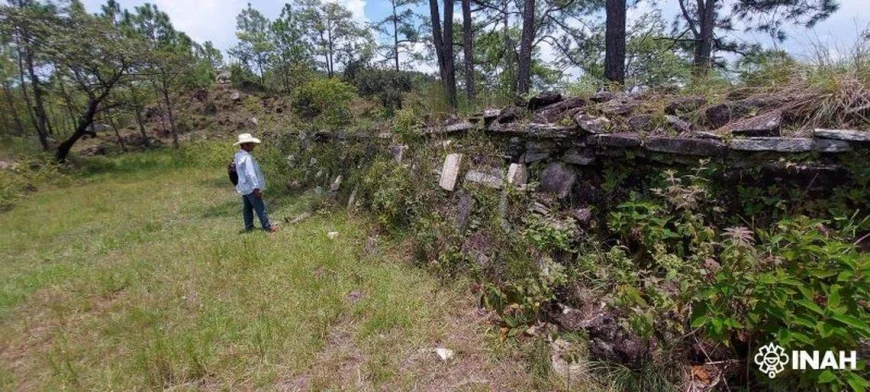
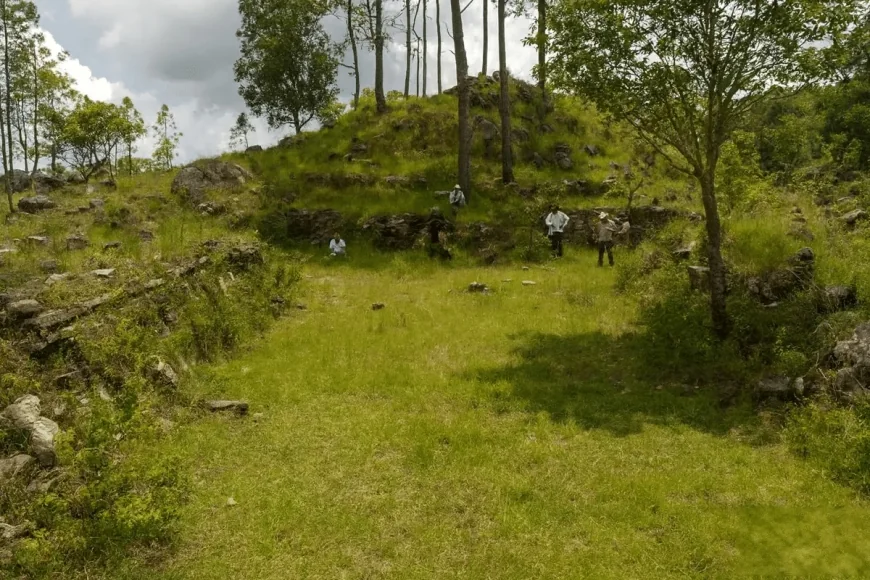
The site, known as Paso Temprano — or Corral de Piedra to local residents — spans more than 1.2 kilometers and dates back roughly 1,200 years, to the Epiclassic period (600–900 CE). Researchers describe it as a sophisticated urban center featuring palatial compounds, a ceremonial ball court, and defensive walls, all constructed using a distinctive architectural method known as Mixtec facing.
This construction technique, characterized by upright stone blocks alternating with thin slabs, is similar to that seen at Tehuacalco, another major Epiclassic site near present-day Chilpancingo.
“In the coming years, the study of Paso Temprano could define a local archaeological culture that flourished between the Epiclassic and Early Postclassic periods,”
said archaeologist Miguel Pérez Negrete, who, along with colleague Cuauhtémoc Reyes Álvarez, led the INAH research team.
While later occupied by Amuzgo and Mixtec peoples during the Late Pre-Hispanic period, the identity of Paso Temprano’s original builders remains a mystery.
Preliminary surveys suggest a complex social hierarchy within the settlement’s design. Lower terraces appear to contain modest residential structures, while elevated zones feature palatial and ceremonial buildings, indicating a stratified society with defined elite and communal spaces.
“The ascent is steep, but the architecture is extraordinary,” Pérez Negrete observed. “You can clearly distinguish living areas, corridors, checkpoints, and ceremonial sectors. The preservation is so remarkable it feels as though the centuries have barely touched it.”
Among the most striking discoveries is a 49-meter-long I-shaped ball court, distinguished by stone-lined forecourts and natural promontories that likely served as viewing platforms. Nearby, archaeologists identified an 11-by-4.5-meter hall, a plain stele believed to have functioned as an altar, and several smaller adjoining chambers.
Experts believe that ongoing excavation and analysis of Paso Temprano will deepen understanding of regional cultural development during a key transitional era in Mesoamerican history — one that bridged the decline of great Classic-period centers and the rise of Postclassic civilizations.