


















































































































Archaeologists uncover complete skeleton near former field hospital at Waterloo battlefield
Archaeologists have unearthed a complete human skeleton near a former field hospital on the Battle of Waterloo site — a rare and poignant discovery shedding new light on one of Europe’s bloodiest conflicts.
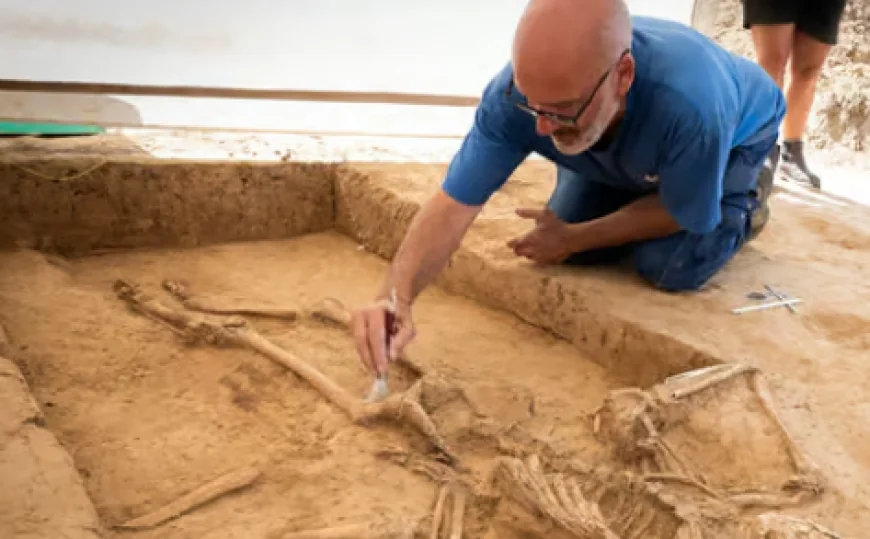
The excavation, conducted by Waterloo Uncovered, a U.K.-based archaeological charity combining research with veteran rehabilitation, revealed the remains in a roadside ditch filled with medical waste, ammunition boxes, and amputated bones. Experts believe the skeleton likely belonged to a soldier who died more than 200 years ago, during the 1815 battle that ended Napoleon Bonaparte’s reign.
A glimpse into Waterloo’s grim aftermath
The Battle of Waterloo, fought near Brussels in June 1815, marked the decisive defeat of Napoleon and the conclusion of the Napoleonic Wars. An estimated 20,000 soldiers were killed, but few of their remains have ever been recovered. Many corpses were burned, buried in mass graves, or even sent to Britain to be ground into fertilizer — leaving historians with scarce human evidence of the battle.
Until now, archaeologists had uncovered only one other complete skeleton from the site. The new discovery, therefore, represents a major breakthrough in the study of battlefield archaeology.
“We don’t know whether that person was killed in battle and brought here, or whether it was a patient who died in the hospital,” said Tony Pollard, an archaeologist at the University of Glasgow and one of Waterloo Uncovered’s project directors, speaking to Agence France-Presse (AFP).
Evidence of chaos and desperation
Archaeologists found the skeleton amid amputated limbs and other medical debris, evidence of the desperate conditions in the nearby Allied field hospital.
“Finding the skeleton near amputated limbs and other debris shows the state of emergency that existed,” said Véronique Moulaert of the Wallonia Heritage Agency. “Dead soldiers, amputated limbs and more would have had to be swept into nearby ditches and quickly buried in a desperate attempt to contain the spread of disease.”
The remains will be transferred to the Royal Belgian Institute of Natural Sciences in Brussels, where specialists will clean and examine the bones to determine the soldier’s age, gender, and possible cause of death.
A continuing mission to uncover history
Founded in 2015, Waterloo Uncovered brings together archaeologists, military veterans, and students to excavate the historic battlefield. The organization has previously found musket balls, leg bones, and a six-pound cannonball. After a hiatus during the pandemic, the team resumed work earlier this year.
In parallel with this find, researchers are conducting the first large-scale geophysical survey of the Waterloo site, hoping to locate mass graves, buried structures, or metal caches left behind from the fierce fighting.
For Pollard, the discovery underscores the human toll of the battle:
“I’ve been a battlefield archaeologist for 20 years and have never seen anything like it,” he said. “We won’t get any closer to the harsh reality of Waterloo than this.”