






































































































































2,700-year-old Assyrian inscription discovered in Jerusalem reveals ancient royal link
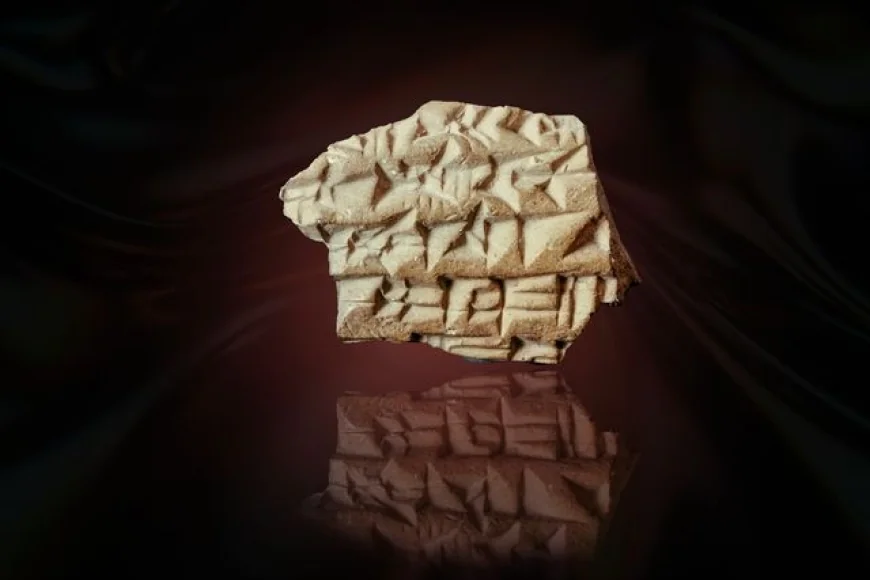
Archaeologists in Jerusalem have made a discovery of exceptional historical importance: a 2,700-year-old pottery fragment inscribed in Assyrian cuneiform, marking the first artifact of its kind ever found in the city. The tiny shard, written in the Akkadian language, offers rare proof of official contact between the Assyrian Empire and the Kingdom of Judah, opening a new chapter in the understanding of First Temple–period diplomacy.
A discovery beneath Jerusalem’s ancient layers
The find was announced by the Israel Antiquities Authority (IAA) and the City of David Foundation, whose joint excavation near the Western Wall unearthed the artifact in soil dating to the 8th–7th centuries BCE. Measuring only 2.5 centimeters, the fragment is believed to have been part of a royal bulla—a clay seal used to secure or authenticate official documents or shipments.
“I was sifting through soil when I noticed a small potsherd with strange markings,” recalled Moria Cohen, a member of the excavation team. “At first, I thought it was a decorative piece. When I realized it was cuneiform, I screamed. It’s overwhelming to know I was the first person to hold this piece after 2,700 years.”
First Assyrian text ever found in Jerusalem
“This is the first Assyrian inscription ever uncovered in Jerusalem from the First Temple period,” said Dr. Ayala Silberstein, the excavation director. “It provides direct evidence of official communication between Assyria and Judah, deepening our understanding of the city’s political and diplomatic role in the ancient Near East.”
The fragment was discovered in a sediment layer that had washed into a Second Temple–period drainage channel, likely originating from a collapsed First Temple–era structure. The excavation site lies near the Temple Mount, one of the most sensitive and historically significant areas in Jerusalem.
A royal seal from the heart of Assyria
Assyriologists Dr. Peter Zilberg and Dr. Philip Vukosavović identified the object as part of a royal seal impression, referencing a “chariot officer” — a high-ranking Assyrian administrator responsible for military or logistical dispatches. The inscription also mentions the first day of the month of Av, apparently linked to a tribute payment or administrative deadline.
“This could be part of a communication between Assyrian officials and Jerusalem’s royal court, possibly during the reign of Sennacherib, the Assyrian king known for his campaign against Judah,” said the researchers. “It may even correspond to events described in II Kings 18:7, when King Hezekiah rebelled against Assyrian rule.”
Made in Assyria, sent to Judah
Laboratory analysis confirmed the fragment’s Assyrian origin. “The clay’s mineral composition matches that of the Tigris River basin, not the southern Levant,” explained Dr. Anat Cohen-Weinberger of the IAA. “That means this seal was manufactured in Assyria — possibly in Nineveh, Ashur, or Nimrud — and sent to Jerusalem. It’s direct, physical evidence of official contact between the two kingdoms.”
A fragment that rewrites history
For historians, the implications are profound. The find confirms that Jerusalem was an active participant in the geopolitical and administrative networks of the ancient Near East, rather than an isolated kingdom on the empire’s fringe.
“The significance of this tiny artifact is enormous,” said the research team. “It’s the first tangible proof of written correspondence between the Assyrian Empire and Jerusalem — a message from the imperial center to the Judean frontier.”
The Israel Antiquities Authority will publicly unveil the artifact at a special conference in Jerusalem, which will also be streamed live for global audiences.
“This discovery reminds us how a single fragment of clay can reshape entire chapters of ancient history,” concluded the researchers.