






































































































































Hellenistic cult site and Bronze Age pile dwelling uncovered in Italy’s Pertosa-Auletta Caves
Archaeologists have revealed remarkable new findings in the Pertosa-Auletta Caves (Grotte dell’Angelo) in southern Italy, uncovering a Hellenistic-era cult structure and additional sections of a Bronze Age underground pile dwelling. The caves, located in Salerno province, span approximately 2,500 meters and are home to Italy’s only navigable underground river, making them one of the most significant archaeological and natural sites in the region.
Sacred and domestic spaces spanning millennia
Human activity in the caves dates back roughly 8,000 years, and the latest discoveries, made during the 2025 excavation season, highlight the dual role of the caves as both domestic and ritual spaces.
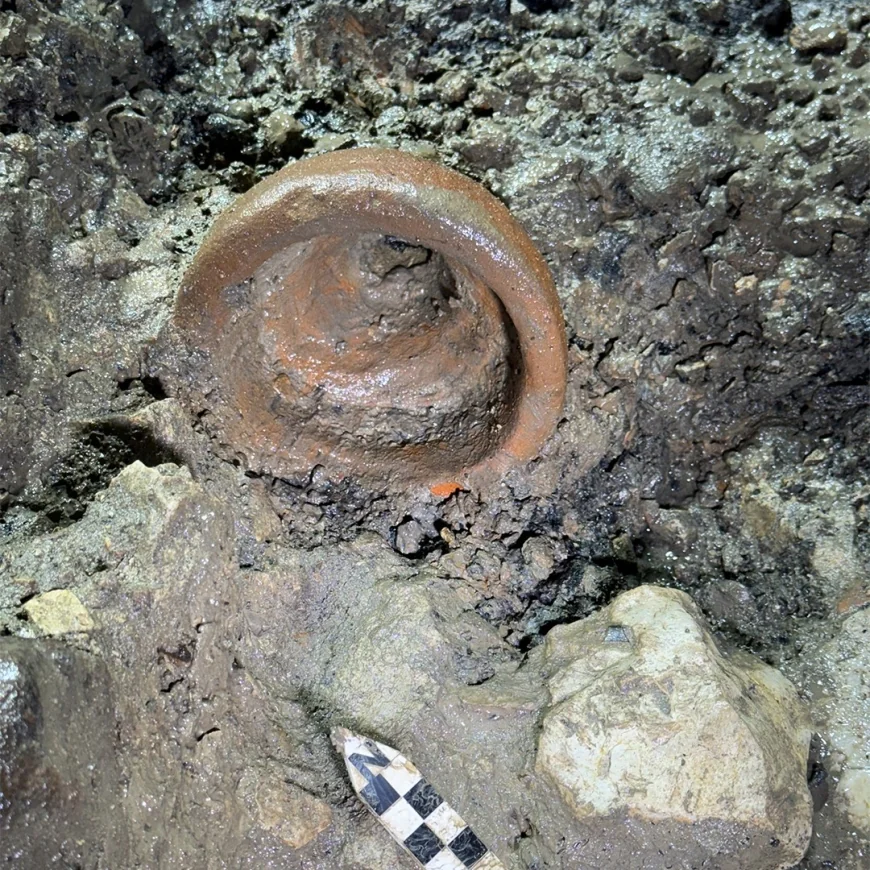
Archaeologists uncovered remnants of a Hellenistic shrine from the 4th to 1st centuries BCE, built along the subterranean river. The cult area contained ritual offerings, including sculpted figurines, terracotta ornaments, coins, incense burners, unguent vessels, and traces of burned plants. Among the most striking finds were a large piece of amber and a terracotta female head, likely used in ceremonies dedicated to water or fertility deities.
Underground Bronze Age dwelling
In addition to the cult site, the team further explored a pre-existing Bronze Age pile-built structure, dating from the 2nd millennium BCE. This unique dwelling is Europe’s only known underground pile construction, and the recent campaign uncovered new structural sections and a rare Bronze Age chisel with its original wooden handle, preserved thanks to the cave’s constant humidity.
Laboratory analysis of wood samples is underway to provide insights into construction techniques and environmental conditions from over 3,000 years ago, underscoring the technological sophistication of Bronze Age builders and the exceptional preservation offered by the cave ecosystem.
Excavation and research initiatives
The project was conducted by the Central Institute for Archaeology (ICA) under Italy’s Ministry of Culture, in collaboration with the MIdA Foundation, which manages the caves. The ICA is piloting methodological standards for underground archaeology, integrating traditional excavation with modern conservation techniques and digital documentation.
The 2025 campaign also includes an educational initiative, enabling local high school students to participate in fieldwork. The program introduces them to speleo-archaeology, offering hands-on experience in uncovering the rich and layered history of southern Italy.