

















































































































IEA cuts 2030 renewable power growth forecast by 248 GW, cites US and China slowdown
Paris — The International Energy Agency (IEA) has reduced its global renewable power growth forecast for 2030 by 248 gigawatts (GW) compared with last year’s outlook, driven primarily by slower-than-expected expansion in the United States and China, even as solar power continues to set new records.
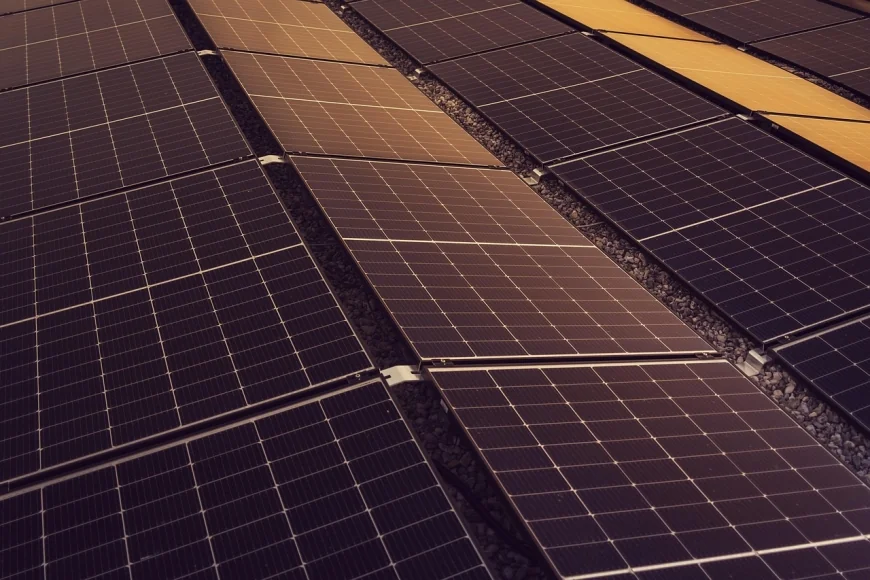
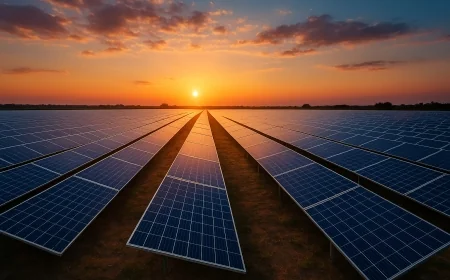
According to the IEA’s latest report, global renewable capacity is now projected to reach 4,600 GW by 2030, down from last year’s forecast of 5,500 GW. Solar energy is expected to contribute roughly 80% of the growth, underscoring its dominant role in the clean energy transition.
Regional drivers and constraints
The downward revision reflects policy and regulatory shifts: in the United States, the early phase-out of federal tax incentives and other regulatory changes cut the IEA’s growth expectations by nearly 50%. In China, the transition from fixed tariffs to competitive auctions has compressed project economics, slowing new solar and wind deployment.
These declines are partially offset by stronger prospects elsewhere. India is on track to become the second-largest growth market after China, bolstered by expanded solar auctions, faster permitting, and a rooftop solar boom, positioning it to comfortably meet its 2030 targets.
Europe is also set for growth due to ambitious policy frameworks, increased auction volumes, and streamlined permitting processes, while several emerging economies in Asia, the Middle East, and Africa are accelerating renewable deployment as costs decline and national targets rise.
Technology-specific trends
While onshore solar leads the expansion, offshore wind faces challenges. The IEA cut its growth outlook for offshore wind by roughly 25% due to policy resets, supply-chain bottlenecks, and rising costs. Conversely, pumped-storage hydropower is expected to grow 80% faster over the next five years than in the previous five, addressing grid-integration challenges. Geothermal energy installations are projected to hit record highs in the United States, Japan, Indonesia, and other emerging markets.
IEA Executive Director Fatih Birol emphasized the urgency of policy action:
“The growth in global renewable capacity in the coming years will be dominated by solar. Policymakers must address supply-chain security and grid constraints to sustain this expansion.”
The report also highlights the concentration risks in solar and rare-earth supply chains, noting that key segments remain over 90% concentrated in China through 2030, posing potential bottlenecks for the global clean energy transition.