




























































































































U.S. District Leaders Turn to Global Learning to Improve Student Outcomes Amid Budget Pressures
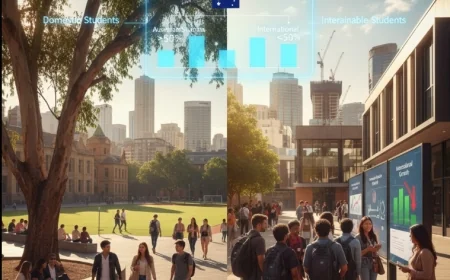
Public school districts across the United States are grappling with declining enrollment and shrinking budgets, forcing leaders to make difficult decisions on how to allocate limited resources. In this environment, research-backed strategies and global learning opportunities are emerging as vital tools to enhance student outcomes and inform decision-making.

Learning from International Perspectives
“You learn more about your own system and ask better questions by examining other systems that are completely different,” said Dr. Laura Jacob, superintendent of the California Area School District in Coal Center, Pennsylvania, and member of the Digital Promise League of Innovative Schools.
In 2024 and 2025, Dr. Jacob joined more than 60 education leaders in international study tours organized by Digital Promise, focusing on whole-child development and technology-enabled learning. The tours, held in Helsinki, Finland, and Montevideo, Uruguay, allowed participants to study diverse education systems and return with actionable strategies for their own districts.
“These ideas from different countries help you do so much better locally,” Jacob added. One example from Helsinki was the “Fox Book,” a citywide environmental curriculum teaching elementary students about sustainability using local animal characters. Inspired by this, Jacob created “The Goat Book” for her Pennsylvania students, adapting the Finnish model to the local context with the help of AI tools for narrative and character development.
Whole-Child Learning in Connecticut
Sandra Faioes, deputy superintendent for Norwalk Public Schools in Connecticut, leveraged her international experience to address diverse student needs in her district. With an increasing number of multilingual learners and students qualifying for free or reduced-price lunch, Faioes studied Finland’s whole-child education model, which emphasizes academic, social, emotional, and physical development.
During her visit, she observed students spending two hours outdoors before engaging in project-based learning, highlighting the importance of play and exploration. Back home, Faioes conducted professional development sessions for teachers, demonstrating how small, evidence-backed changes can significantly improve student learning.
Technology and Equity in Colorado
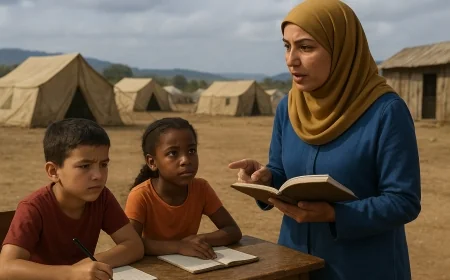
For Kellie Ady, senior director of education strategy at PowerSchool and former district leader in Denver, the Montevideo study tour offered insights into equitable access to digital learning. Leaders in Uruguay demonstrated how technology and AI are integrated into both urban and rural classrooms, supported by comprehensive teacher training programs.
“It’s so easy to get stuck in your own context and only know the way you do things. An opportunity like this to step outside your country and learn from others — it’s hard to quantify what an amazing experience that is,” Ady said.
The Value of Global Collaboration
International study tours allow district leaders to expand their perspectives, collaborate with peers, and identify innovative solutions that can be adapted to local contexts. At a time when budgets are tightening, these experiences enable leaders to prioritize initiatives that have proven impact and support sustainable improvements in teaching and learning.
By combining research-backed strategies with insights from global education systems, U.S. district leaders are better equipped to navigate financial constraints while enhancing student outcomes, equity, and innovation in their schools.