




















































































































U.S. Defense Secretary urges Southeast Asian nations to boost maritime defense amid China tensions
KUALA LUMPUR, Nov 1 — U.S. Defense Secretary Pete Hegseth on Saturday called on Southeast Asian nations to strengthen their maritime defenses and stand united against what he described as China’s increasingly destabilizing actions in the South China Sea.
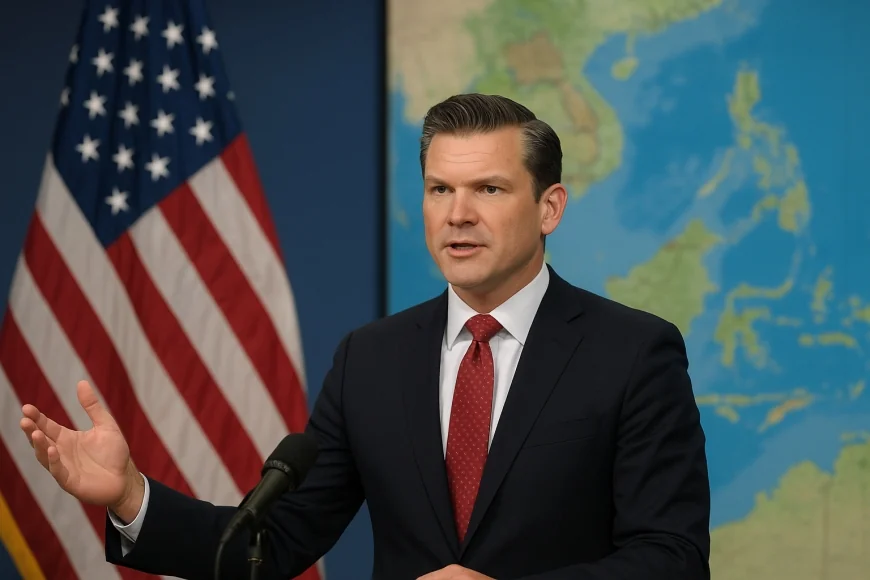
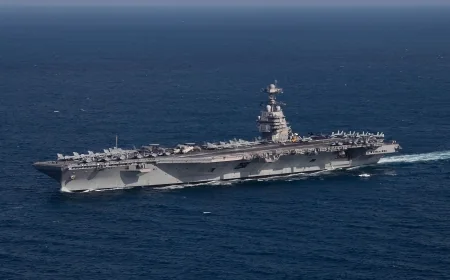
Speaking at a defense meeting in Malaysia with ministers from the Association of Southeast Asian Nations (ASEAN), Hegseth warned that China’s recent behavior — including vessel rammings and the use of water cannons — underscored a pattern of escalating maritime aggression.
“The South China Sea remains one of Asia’s most volatile flashpoints,” he said, stressing that China’s sweeping territorial claims “challenge the sovereignty of multiple ASEAN nations.” Beijing claims nearly the entire sea, overlapping with territories claimed by the Philippines, Vietnam, Malaysia, and Brunei.
Hegseth criticized China’s decision to declare Scarborough Shoal, seized from the Philippines in 2012, a “nature reserve,” calling it “another attempt to coerce new and expanded territorial and maritime claims.”
“You don’t put platforms on nature reserves,” he remarked, accusing Beijing of seeking to dominate its neighbors through coercion and intimidation.
While emphasizing that Washington does not seek conflict, Hegseth said the U.S. will “monitor China’s behavior closely” and continue to support the freedom of navigation and sovereign rights of all nations in the region.
He also encouraged ASEAN to expedite talks on a long-delayed Code of Conduct with China, aimed at reducing tensions and establishing clear maritime rules. However, he urged the bloc not to rely solely on diplomacy, proposing instead the creation of a “shared maritime domain awareness” network to improve real-time coordination and joint responses to aggression.
“Whoever faces provocation should never be left alone,” he said.
Hegseth welcomed plans for an ASEAN-U.S. maritime exercise in December, which he said would strengthen interoperability and readiness.
Meanwhile, China rejected U.S. criticism, accusing Washington of interfering in regional affairs. Chinese officials said their activities in the South China Sea were lawful and defensive, while condemning recent Philippine-led naval and air drills with the U.S., Australia, and New Zealand as provocations.
Tian Junli, spokesperson for China’s People’s Liberation Army Southern Theater Command, said the exercises “seriously undermined regional peace and stability” and accused the Philippines of being a “troublemaker” in the South China Sea.
The two-day drills, which ended Friday, included anti-submarine warfare simulations, replenishment operations, and air and communication exercises — part of Manila’s continued effort to assert its maritime rights amid growing regional tensions.