



























































































































UK unemployment rises to 5% amid slowing wage growth
The UK unemployment rate increased to 5% in the three months to September, its highest level since early 2021, signaling a weakening job market. The data, which also showed a slowdown in regular wage growth to 4.6%, has led experts to suggest the Bank of England (BoE) may consider an interest rate cut as early as December. Uncertainty surrounding the upcoming Budget is also impacting business hiring decisions.
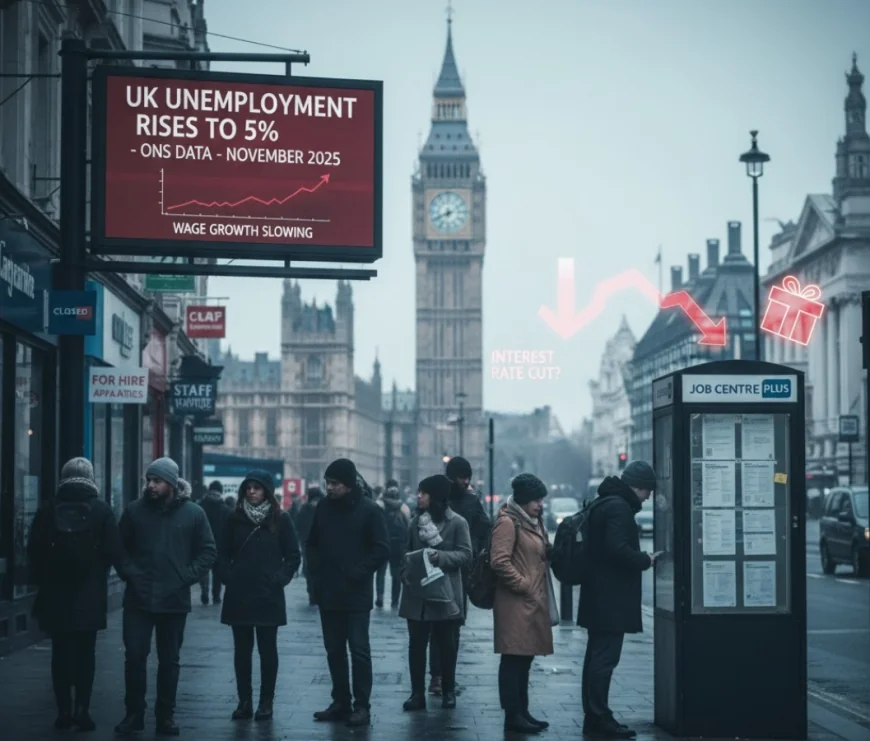
Unemployment in the United Kingdom has risen to 5%, reaching the highest level recorded since early 2021, according to the latest data from the Office for National Statistics (ONS). The figure, which covers the three months to September, exceeded analysts’ expectations of 4.9%.
This rise in joblessness coincides with a noticeable slowdown in pay growth. Regular wages, excluding bonuses, grew by 4.6% in the third quarter, down from 4.7% the previous month. Total earnings, including bonuses, also decreased to 4.8%, a drop from the previous 5%.
Implications for Interest Rates
Richard Carter, head of fixed interest research at Quilter Cheviot, suggested the softening figures could influence the Bank of England (BoE) to cut interest rates, possibly offering an "early Christmas present."
Carter noted the recent tight 5-4 split among the Monetary Policy Committee (MPC) members at the last meeting, where Bank Governor Andrew Bailey used his deciding vote to err on the side of caution and hold rates steady.
The BoE’s next interest rate decision is scheduled for December 18. Carter added that while wage growth pressures are still relatively high, they are slowly easing. "Any further signs of easing in the next labour market print could sway a few more on the committee to cut," he said.
Weaker Labour Market Indicators
ONS estimates further indicate a weakening labour market, showing the number of payrolled employees fell by 117,000 between September 2024 and September 2025, and by 32,000 on a monthly basis. Initial figures for October suggest a further monthly drop of 32,000, though the ONS cautioned that early estimates may be subject to revision.
Despite these figures, the number of job vacancies remained broadly stable at approximately 723,000 between August and October.
Liz McKeown, ONS director of economic statistics, summarized the situation: "Taken together, these figures point to a weakening labour market." The ONS has, however, advised caution regarding its unemployment rate due to recent changes in its survey methodology.
Budgetary Impact
Carter also highlighted that the Chancellor’s upcoming Budget on November 26 is likely influencing business behavior. He suggested that many businesses have postponed major hiring plans due to nervousness about potential future costs, particularly after facing a significant rise in national insurance costs earlier this year.
The BoE will have time to assess the market’s reaction to the Budget, in addition to receiving another labour market report, before its December rate decision. The Bank of England has stated it expects the unemployment rate to hover near 5% for the next few years.