































































































































Fed cuts rates by 25 basis points amid internal divisions and rising uncertainty
The U.S. Federal Reserve has lowered its key policy rate by 25 basis points, a move widely anticipated by financial markets. Yet, growing internal divisions within the Federal Open Market Committee (FOMC) are casting uncertainty over the central bank’s next steps.
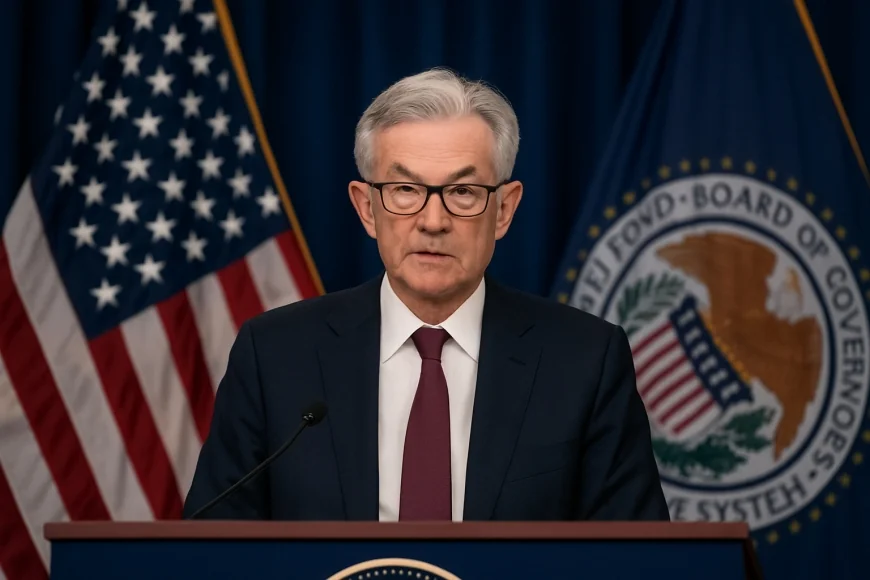
At its October meeting, the FOMC delivered the second rate cut of the year, reducing the federal funds rate to a target range of 3.75% to 4.0%. The decision followed recent signals from Chair Jerome Powell, who hinted that further easing could be necessary amid signs of slowing growth.
However, the vote revealed a lack of consensus: one member pushed for a deeper 50-basis-point reduction, while another opposed any cut at all. This split underscores the delicate balance the Fed faces between supporting a softening labor market and containing persistent inflation.
In addition to lowering rates, the Fed announced that it will end its quantitative tightening program—the process of shrinking its balance sheet—effective December 1st. From that date, the central bank will stop allowing its Treasury holdings to mature without reinvestment and will redirect principal payments from mortgage-backed securities into Treasury bills.
Inflation pressures and data gaps complicate policy
In its post-meeting statement, the Fed acknowledged that while the labor market has weakened, inflation remains “sticky” and above target. Officials also cited challenges caused by the lack of timely government data, which has made it harder to calibrate policy accurately.
Currently, the federal funds rate stands only 0.75 percentage points above the inflation rate, leaving limited room for further cuts without risking renewed price pressures. The Fed’s balance sheet, meanwhile, has already declined by over $2.2 trillion in recent years, with reserves now representing roughly 10% of GDP—a level the Fed considers sustainable.
Markets brace for volatility
Before the announcement, traders had been pricing in a series of rate cuts that would bring the policy rate below 3% by mid-2026. However, Powell emphasized that there is “no pre-set path” for monetary policy, suggesting that future moves will depend on incoming data and the evolving economic outlook.
Analysts expect short-term interest rate expectations to remain volatile as policymakers debate how quickly to ease. Longer-term rates, in turn, are likely to track shifts in growth and inflation expectations.
Despite uncertainty, markets broadly anticipate that interest rates will trend lower into 2026, though the journey may be uneven. For investors, the current environment favors maintaining intermediate-term bond duration—between five and ten years—to balance yield opportunities with the risks of volatility and reinvestment.