








































































































Tunisian man sentenced to death for insulting President Saied released after pardon
A Tunisian man who was sentenced to death over social media posts deemed offensive to President Kais Saied has been released following a presidential pardon, his lawyer and human rights organizations confirmed on Tuesday.
Saber Ben Chouchane, arrested in January 2024 and later condemned by a court in Nabeul, east of Tunis, walked free overnight and returned home to his family, according to his lawyer Oussama Bouthelja. The release followed mounting international outrage over what rights groups described as an extreme assault on freedom of expression.
“He has been freed and is now with his family,” Bouthelja told reporters. His brother, Jamal Chouchane, also confirmed the release, while Amnesty International said in a statement that Ben Chouchane’s liberation resulted from “a presidential pardon.”
Death sentence sparked global outcry
Ben Chouchane had been found guilty of “insulting the president, the minister of justice and the judiciary,” as well as spreading false news and incitement through his Facebook posts. The verdict, delivered last week, drew widespread condemnation from human rights defenders and international organizations.
Bouthelja said he had filed an appeal on Friday but was later informed that his client had withdrawn it, opening the door for a presidential pardon.
“I was astonished by the death sentence,” the lawyer said, calling the ruling “a shocking moment” that underscored the growing crackdown on dissent in Tunisia.
Rights groups condemn repression
Amnesty International’s regional director, Heba Morayef, described the original death sentence as “a significant escalation and an outrageous assault on human rights.”
“The use of capital punishment in this case is a stark and horrifying illustration of a government weaponizing the justice system to crush freedom of expression and the slightest sign of dissent,” Morayef said.
The Tunisian League for the Defense of Human Rights Abroad (CRLDHT), based in Paris, also condemned the ruling, saying it set “a serious precedent” and reflected “unprecedented levels of human rights violations” in the country.
Mounting concerns under Saied’s rule
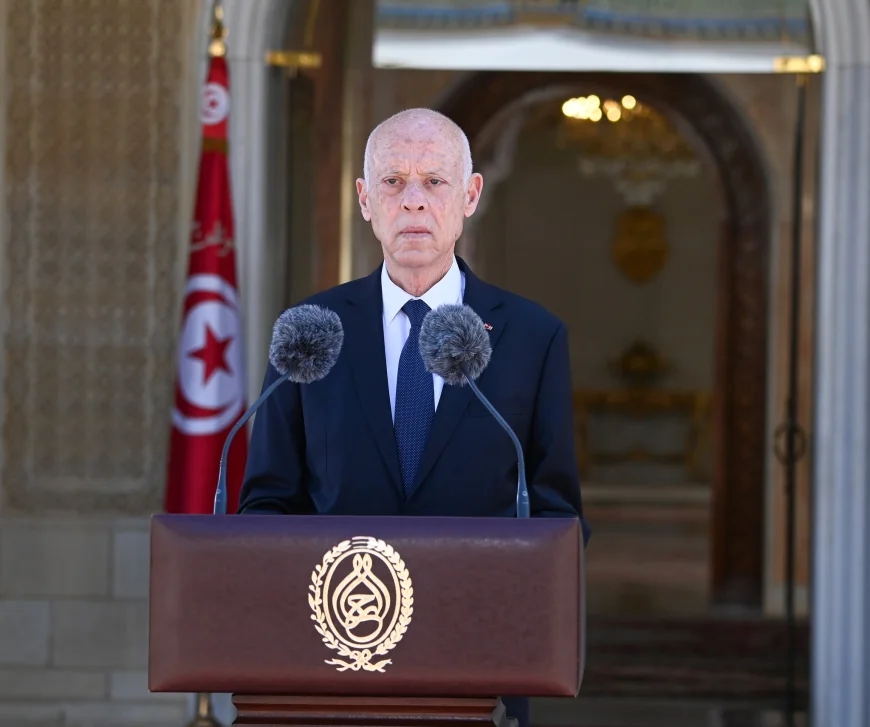
President Kais Saied, elected in 2019, has faced growing criticism since dissolving Tunisia’s parliament in 2021 and assuming broad powers by decree. Rights groups accuse him of undermining democratic institutions and silencing opposition voices.
A September 2022 decree criminalizing the spread of “false news” has been widely denounced as a tool to suppress free speech. Dozens of Saied’s critics — including journalists, lawyers, and political opponents — have since been prosecuted and remain behind bars.
Ben Chouchane’s case, observers say, illustrates the deepening erosion of Tunisia’s hard-won freedoms more than a decade after the Arab Spring.
“This pardon may bring relief to one family,” Amnesty International said, “but it does not undo the alarming message sent to all Tunisians who dare to speak out.”